What Happened
Microsoft has raised the alarm about a new category of insider threat: AI agents. In a recent post on the Microsoft Security Blog, the company argues that as organizations deploy autonomous AI agents to automate workflows, these agents effectively become "newest insiders" — entities that operate inside trusted environments but at speeds and scales that traditional security controls cannot keep up with.
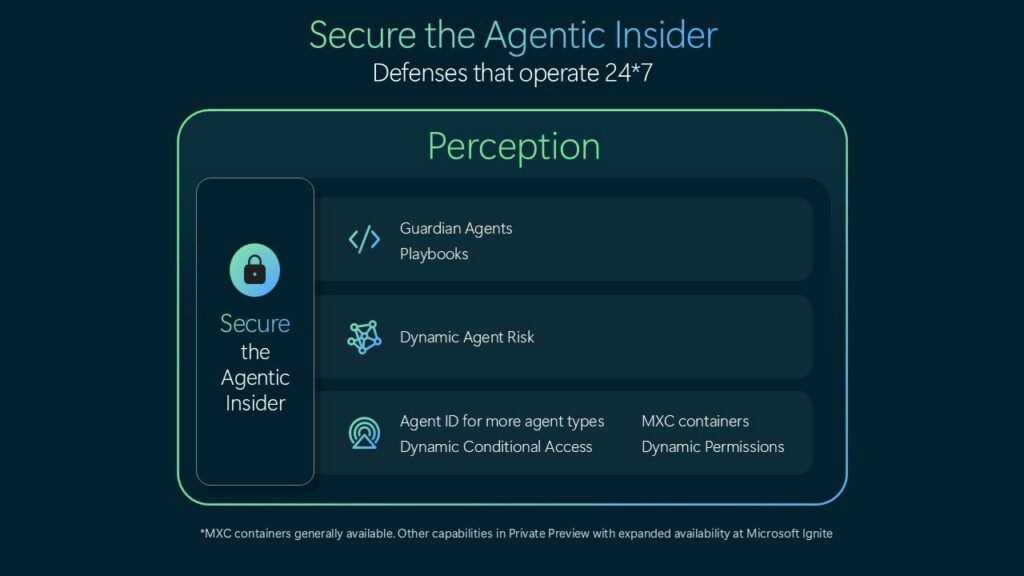
To help organizations manage this emerging risk, Microsoft is rolling out new capabilities within Microsoft 365 E7 and Project Perception. These tools are aimed at containing agent-related risks and enabling continuous adaptation of security policies based on agent behavior.
The Key Details
- New Insider Threat: AI agents, by design, can access data, make decisions, and execute actions without human intervention. While this boosts productivity, it also introduces risk if agents behave unexpectedly or are manipulated.
- Microsoft 365 E7: This licensing tier now includes enhanced monitoring and governance features tailored for AI agents, allowing IT teams to define boundaries, track activity, and enforce compliance policies.
- Project Perception: This initiative focuses on adaptive security — using machine learning to detect anomalies in agent behavior and automatically adjust access controls or trigger alerts in real time.
- Author and Publication: The announcement was made by Nadim Abdo on the Microsoft Security Blog, published on October 19, 2026.
Why It Matters
The rapid adoption of AI agents across industries means that security frameworks must evolve beyond human-centric models. Traditional insider threat programs focus on detecting unusual human behavior, but AI agents operate differently — they follow code, not intuition. If compromised or misconfigured, an agent could inadvertently expose sensitive data, violate compliance rules, or disrupt systems.
Microsoft’s approach acknowledges that static security policies are insufficient. Instead, organizations need dynamic, behavior-based controls that can respond as quickly as agents act.
What It Means for Readers
For businesses and IT leaders, this signals the need to reassess security strategies when deploying AI agents. Relying solely on perimeter defenses or user-based access controls may no longer be enough.
For developers and creators building or integrating AI agents, it underscores the importance of designing with security and observability in mind from the start.
For technology enthusiasts and students, this represents a shift in how we think about trust and control in automated systems — moving from identity-based to behavior-based security models.
What Happens Next
Organizations using or planning to adopt AI agents should evaluate how their current security infrastructure handles non-human actors. Microsoft’s new tools offer one path forward, but broader industry adoption of agent-aware security standards is likely to follow.
VANTIX Takeaway
AI agents are not just tools — they are autonomous actors operating inside your systems. Security must evolve to match their speed, scope, and unpredictability. Microsoft’s latest offerings are an early response to a challenge that will define enterprise security in the age of AI.


