What Happened
A former NVIDIA insider who spent seven years leading product marketing for the company's robotics platforms has offered a blunt assessment: robotics has not yet had its moment.
Amulya Vishwanath, who now works as a venture capitalist, argues that the field is still in its "Lego era" — a period where the foundational pieces of robotics are being rebuilt rather than assembled into something transformative. Her view runs counter to those who believe that robotics, powered by general-foundation models, is on the verge of a breakthrough comparable to what happened in large language models.
The Key Details
Vishwanath's credentials are notable: she led product marketing for NVIDIA's robotics platforms for seven years before transitioning into venture capital. That background gives her a unique vantage point — she understands both the engineering realities of robotics hardware and the commercial dynamics of the companies building them.
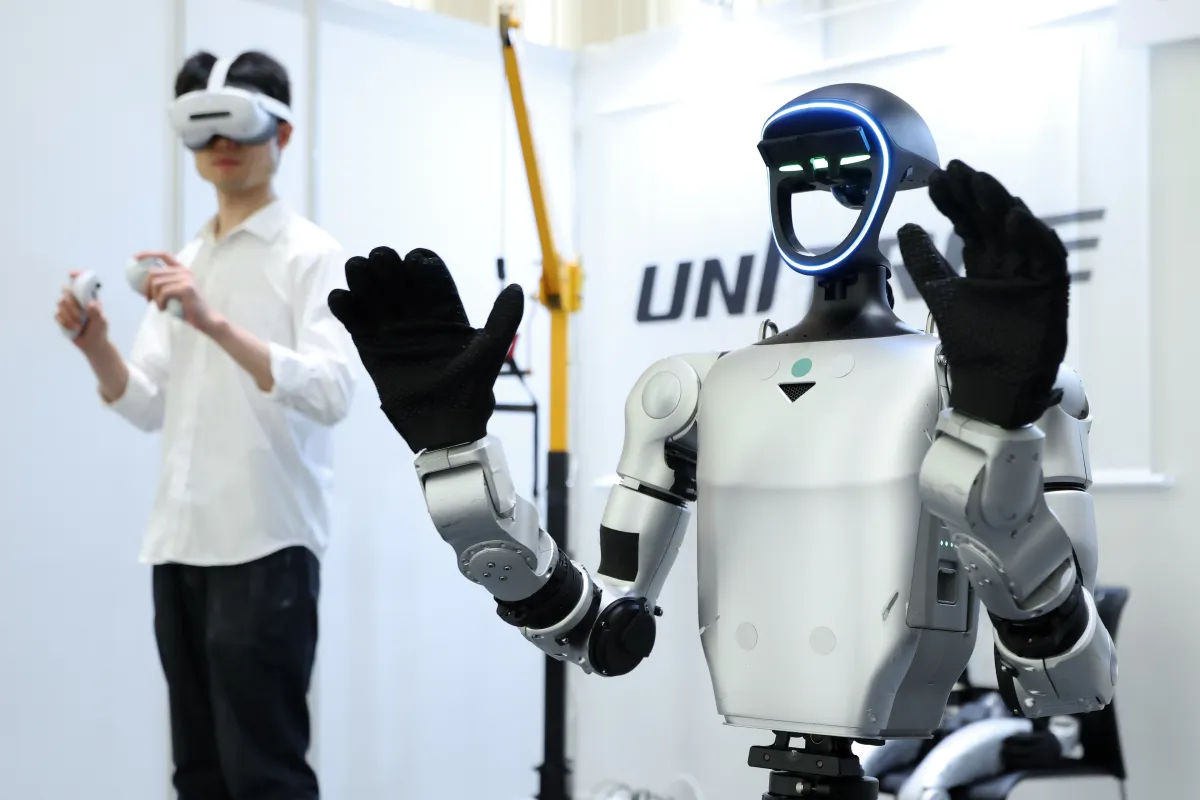
Her central claim is that robotics today is defined by incomplete building blocks. These include:
- Actuators — the motors and mechanisms that allow robots to move and manipulate objects
- Robotic hands — the physical end effectors that give robots dexterity
- Software — the operating systems and control logic that govern robot behavior
- Safety standards — the protocols ensuring robots operate safely around humans
She frames these not as solved problems waiting to be integrated, but as foundational elements that still need to be rebuilt. The implication is that even the most capable AI foundation model cannot make robotics broadly useful until these underlying components mature.
Why It Matters
The significance of this argument lies in how it reframes the conversation around robotics investment and development. If robotics is still in its "Lego era," then the path to a "ChatGPT moment" requires solving fundamental engineering challenges — not just training better models.
This challenges narratives that position robotics as an AI story waiting for a foundation model catalyst. Instead, it suggests that the bottleneck may be in hardware, standards, and the physical layer of robotics rather than in the intelligence layer. For investors, this means evaluating robotics companies on their ability to address these foundational gaps, not merely on their AI capabilities.
What It Means for Readers
For investors and venture capitalists, Vishwanath's perspective suggests that robotics portfolios need to account for hardware and standards maturity as critical success factors. A company with strong AI but weak actuator technology may struggle to deliver on the promise of autonomous robotics.
For developers and engineers, the "Lego era" framing implies that the next wave of robotics innovation will come from solving these foundational problems — building better hands, safer systems, and more reliable control software — rather than from incremental improvements to existing AI models.
For technology enthusiasts, the piece serves as a reminder that AI capabilities alone do not automatically translate into physical autonomy. The gap between a powerful language model and a useful robot is wider than many assume.
What Remains Unknown
Several questions are left open by this analysis:
- Which specific robotics companies or projects are Vishwanath pointing to as evidence that the building blocks are still incomplete?
- Does she envision a timeline for when these foundational pieces might mature?
- How does she reconcile her skepticism with rapid progress in areas like humanoid robotics?
- What would constitute a successful "ChatGPT moment" for robotics in her view?
These unknowns matter because they determine whether Vishwanath's caution reflects a temporary gap or a structural challenge that could slow the entire field.
VANTIX Takeaway
The most important thing to understand from this piece is that robotics' potential is not guaranteed by AI progress alone. The "Lego era" metaphor captures a real truth: even the smartest foundation model cannot make a robot useful if the physical components and safety infrastructure remain unfinished. For anyone evaluating where robotics is heading, the question is no longer just "what can AI do?" but "what else needs to be built first?"


