What Happened
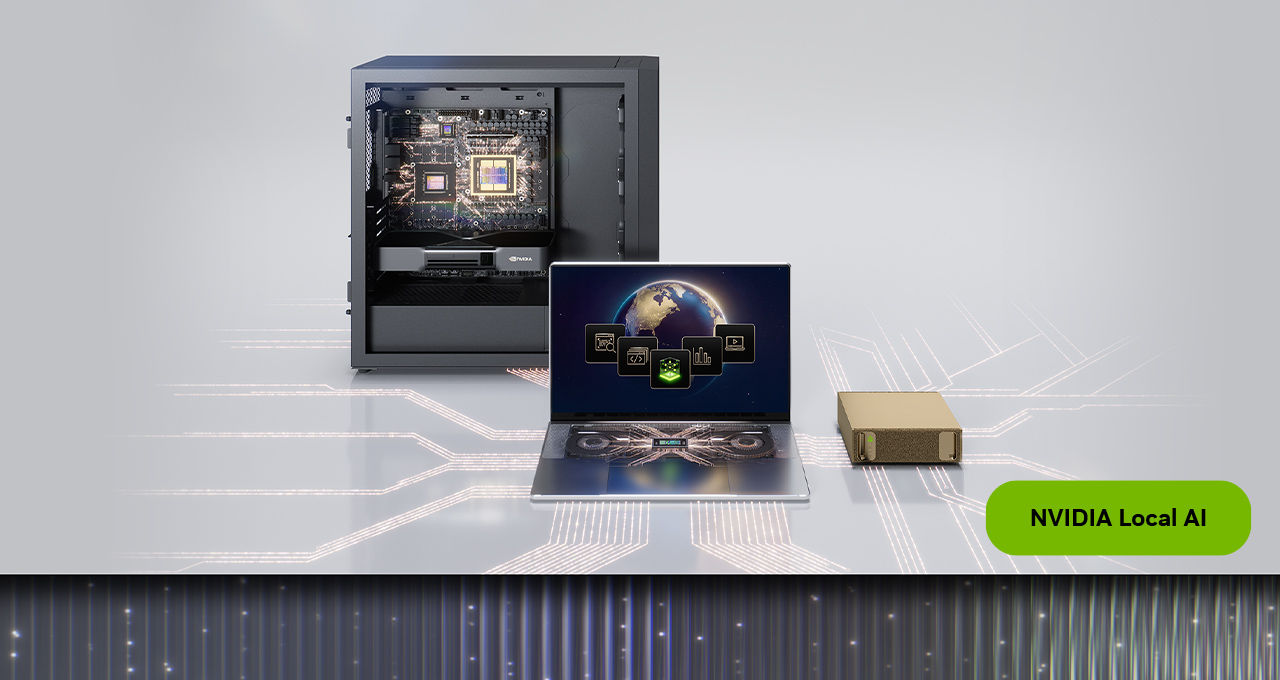
At GTC Berlin, NVIDIA showcased its latest generation of local AI infrastructure designed to bring intelligence closer to end users and enterprises alike. The announcements focus on three key platforms: RTX Spark for personal AI agents on Windows PCs, DGX Spark for application development and scaling on Linux, and DGX Station for enterprise teams handling large-scale AI workloads on Linux.
The company emphasized that these solutions are built around "local intelligence," meaning they process data on-device rather than relying solely on cloud computing. This approach aims to reduce latency, improve privacy, and enable deployment in environments where connectivity may be limited or where data sovereignty is a concern.
The Key Details
RTX Spark – Personal Agents on Windows
Launched recently, RTX Spark brings personal AI agents directly to Windows PCs. These agents can run locally, allowing users to interact with AI-powered assistants, task automation, and creative tools without sending their data to external servers. The integration targets everyday productivity and entertainment use cases where speed and privacy matter.
DGX Spark – Developer-Focused Platform
DGX Spark extends NVIDIA's GPU computing capabilities to the developer ecosystem. It provides a platform for building and scaling machine learning applications on Linux, enabling researchers and engineers to prototype, test, and deploy models efficiently before moving them to larger infrastructure.
DGX Station – Enterprise-Grade Infrastructure
For organizations running frontier-level AI workloads, DGX Station offers robust compute power on Linux. Designed for enterprise teams, it supports training and inference tasks that require significant memory and processing capacity. A Windows version of DGX Station is scheduled to arrive in December, expanding accessibility across operating systems.
Why It Matters
These announcements reflect a broader industry shift toward on-device and edge AI. By providing specialized hardware and software stacks optimized for local intelligence, NVIDIA is addressing two critical needs:
- Privacy and Data Sovereignty: Processing data on-device means sensitive information never leaves the user's device or organization.
- Latency and Reliability: Local execution eliminates dependency on network connectivity, which is essential for real-time applications and mission-critical workflows.
For developers, the flexibility of DGX Spark opens new paths for rapid prototyping. For enterprises, DGX Station enables large-scale AI initiatives while maintaining control over their infrastructure.
What It Means for Readers
- Developers: New tools like DGX Spark lower barriers to entry for building ML applications on Linux, potentially accelerating innovation cycles.
- Enterprises: The availability of powerful, scalable options such as DGX Station makes it easier to adopt generative AI and other advanced models within regulated or secure environments.
- Users: Individuals benefit from more private, responsive AI experiences on their own devices through RTX Spark.
- Businesses: Companies can leverage local AI for customer service, analytics, and operations without compromising data security.
While the specific pricing, release timelines, and detailed technical specifications were not covered in the source, the core message is clear: NVIDIA is doubling down on decentralized AI infrastructure to meet growing demand for on-device and enterprise-grade intelligence.
What Happens Next
NVIDIA will continue to expand the availability of these platforms across regions. The December release of the Windows version of DGX Station represents an important milestone for broader adoption outside traditional Linux-only environments. Additional updates and partner integrations are likely to follow as the product lines mature.
VANTIX Takeaway
NVIDIA's local AI hardware roadmap—from personal agent support on Windows PCs to enterprise-grade Linux infrastructure—signals a strategic push toward ubiquitous, private, and reliable AI at scale. The next steps will depend on how quickly partners and customers adopt these new capabilities.


