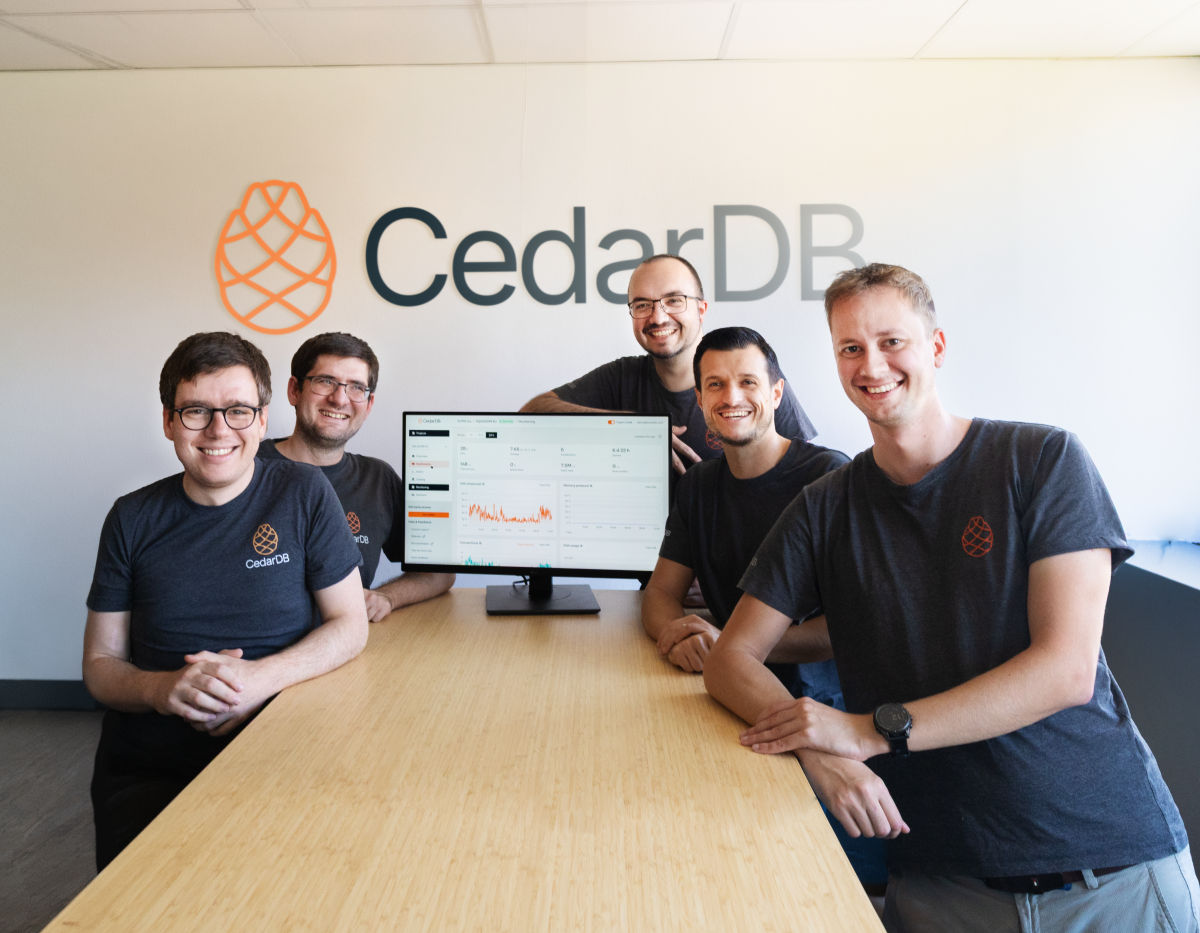
# What Happened CedarDB, a database engine founded by five researchers from the Technical University of Munich’s Umbra project, announced the limited availability of its managed cloud offering, CedarDB Cloud, at TechCrunch Disrupt 2026. The engine is designed to process both transactional (operational) and analytical queries within a single system.
# The Key Details
- CedarDB is based in Munich and is a spinout of the Umbra research project, which was built from scratch to outperform legacy database engines on modern hardware.
- The engine promises faster performance without requiring additional CPUs, memory, or power, and aims to need few changes from existing customer applications.
- It maintains compatibility with PostgreSQL, which the founders say lowers switching costs because users do not have to rebuild their apps and aligns with the logic that large language models (LLMs) are most familiar with.
- Cofounder and CEO Moritz Sichert told TechCrunch that the split between analytical and operational databases is becoming less relevant as agentic AI increases the need to ask natural‑language questions about transactional data.
- The company has been in development for about a decade; its current momentum comes from enterprises that store years of transactions but struggle to answer analytical questions quickly.
- In May 2025 CedarDB launched CedarDB Enterprise (on‑premise) and a free CedarDB Community Edition, accompanied by a €5.3 million (≈ $6 million) seed funding round.
- After beta testing with waitlist users, the company announced limited availability of CedarDB Cloud at TechCrunch Disrupt, where it is one of 20 startups competing in the Startup Battlefield.
- A fully managed cloud version is expected to help CedarDB reach customers beyond large enterprises and better compete with firms such as Databricks, which at its June 2025 Data + AI Summit introduced LTAP, an architecture aiming to unify transactions, analytics, streaming, and operational data on a single storage copy.
- Sichert views Databricks’ move as validation of the market demand for what CedarDB offers.
- The startup currently has a team of 14 people and plans to expand its workforce as cloud adoption grows, which would likely trigger a future funding round.
# Why It Matters The traditional separation of databases into those optimized for transactions and those optimized for analytics creates complexity for businesses that want to derive insights from their operational data in real time. CedarDB’s approach removes that split, potentially simplifying data stacks and reducing the need for separate systems. Its compatibility with PostgreSQL and claim of hardware‑efficient performance lower the barrier to adoption, especially for organizations already using PostgreSQL‑based applications.
# What It Means for Readers
- Enterprises and data teams: If your organization runs PostgreSQL‑based applications and wants to run analytical queries on the same data without moving it to a separate warehouse, CedarDB could reduce architectural complexity.
- Developers: The engine’s promise of minimal application changes means you might be able to evaluate it without rewriting existing code.
- Technology enthusiasts interested in AI: The link between agentic AI and the need for unified transactional‑analytical databases illustrates how emerging AI use cases are influencing infrastructure choices.
# What Happens Next CedarDB intends to serve its first cloud users with the existing 14‑person team and will consider expanding the team and raising additional capital as adoption increases. The limited availability of CedarDB Cloud announced at Disrupt 2026 marks the start of a broader rollout that could position the startup against larger data‑platform vendors.
# VANTIX Takeaway CedarDB shows how a focus on hardware efficiency and PostgreSQL compatibility can enable a single database to handle both transactional and analytical workloads—a capability that is becoming more valuable as AI‑driven applications demand instant insights from operational data.


