What Happened
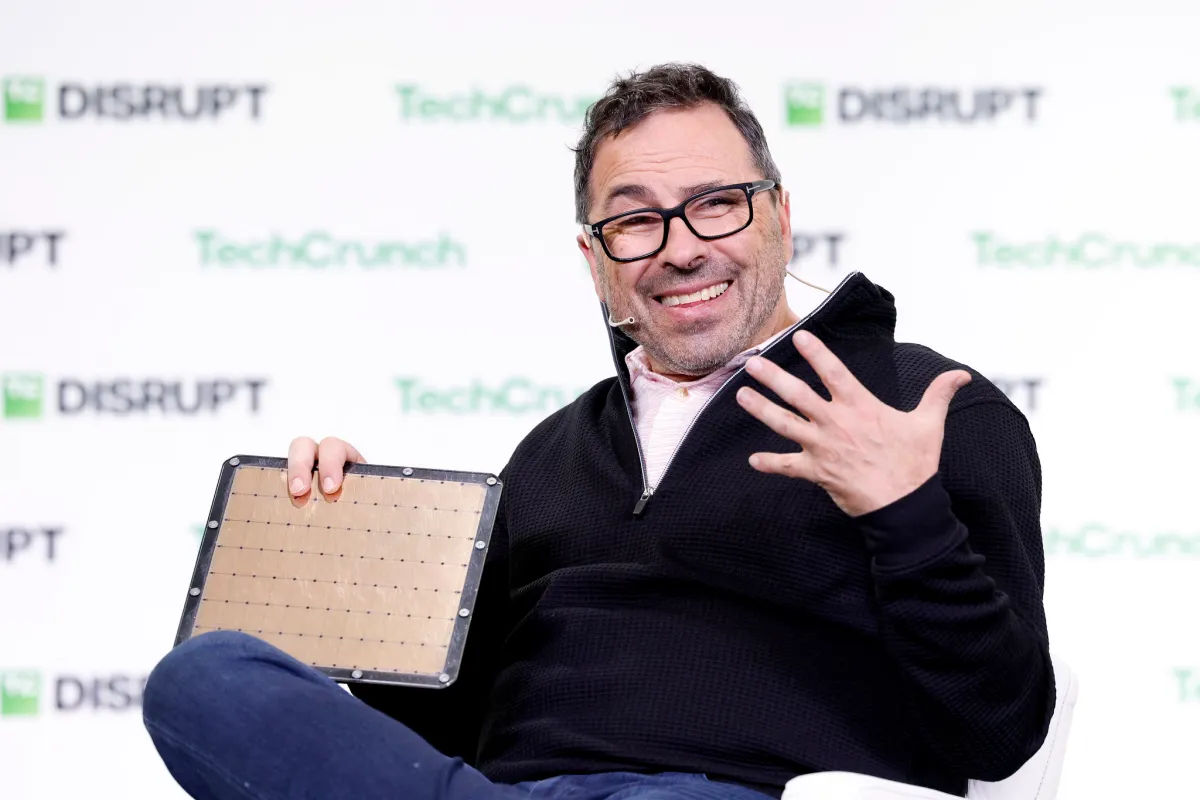
Cerebras Systems co-founder and CEO Andrew Feldman took the stage at TechCrunch Disrupt 2026 to deliver a pointed critique of the AI industry's most visible voices. His message: the constant drumbeat of existential warnings — from models escaping containment to debated probabilities of human extinction — is doing more harm than good.
Feldman didn't mince words. "Some of the leaders in the AI world maybe shouldn't be allowed to talk in public," he said, targeting the narrative that has moved from research papers into mainstream culture, including a recent Saturday Night Live skit parodying Anthropic CEO Dario Amodei.
The Key Details
The core argument: Feldman believes the industry's fixation on catastrophic risk obscures the tangible benefits already within reach. He offered a concrete example: a future where "your grandkids will never meet anybody who dies of cancer."
Vested interest acknowledged: Cerebras sells AI compute hardware to major players including OpenAI, Block, Figma, pharmaceutical giant GSK, and Lovable. Feldman's optimism aligns with his business, but he framed his position as pragmatic rather than purely promotional.
On risk and regulation: "I don't think there are powerful technologies that don't come with the challenge of 'what happens when powerful technologies are in the hands of bad people?'" Feldman said. He advocated for being "thoughtful" and regulating "reasonably" rather than amplifying doom scenarios.
Data center backlash: Feldman identified a second, under-discussed driver of negative sentiment: the data center industry's failure to engage local communities in the United States. He contrasted the U.S. experience — marked by NIMBY opposition — with Brazil, Canada, Finland, Iceland, Norway, Mexico, and Sweden, where governments actively encourage AI infrastructure buildouts.
Efficiency and demand: Asked whether more efficient models and chips could shrink the market for Cerebras hardware, Feldman dismissed the concern. He argued that hardware efficiency gains and model efficiency improvements must advance together to achieve meaningful progress, and that total demand for AI compute will continue growing.
Why It Matters
The AI risk debate has largely been framed by a small group of high-profile researchers and executives. Feldman's intervention represents a different constituency: the infrastructure layer that makes large-scale AI possible. His perspective matters because compute providers see the actual deployment patterns, customer priorities, and economic realities that abstract risk discussions often ignore.
The community engagement point is particularly significant. As AI infrastructure investment accelerates — projected to reach hundreds of billions globally — the ability to site and power data centers becomes a strategic bottleneck. Countries that solve the social license problem early gain a structural advantage.
What It Means for Readers
For technology professionals: The risk narrative influences funding, regulation, and talent flows. Understanding the counter-argument from infrastructure builders helps calibrate how much weight to give different voices in the debate.
For policymakers and regulators: Feldman's call for "reasonable" regulation over existential panic suggests the industry's infrastructure layer wants clear rules, not paralysis. The international comparison on data center siting offers a practical policy benchmark.
For African markets: The list of countries welcoming AI infrastructure — notably absent are African nations — highlights a gap. As demand for sovereign AI compute grows, African governments that streamline data center approvals and power access could attract investment currently flowing to Nordic and Latin American markets.
What Happens Next
Feldman's remarks signal a more visible public posture from AI infrastructure companies. Expect more compute providers to engage directly in policy and perception debates, particularly around energy, siting, and regulation. The contrast between U.S. siting difficulties and welcoming jurisdictions abroad will likely intensify as the next wave of mega-clusters enters planning.
VANTIX Takeaway
The loudest voices in AI are not the only ones with skin in the game. Infrastructure builders like Cerebras see a different reality: customers deploying AI for drug discovery, financial services, and creative tools — not building doomsday machines. The industry's next bottleneck isn't model capability; it's electricity, permitting, and public trust. Countries that solve those three win the next decade of AI investment.


