# What Happened
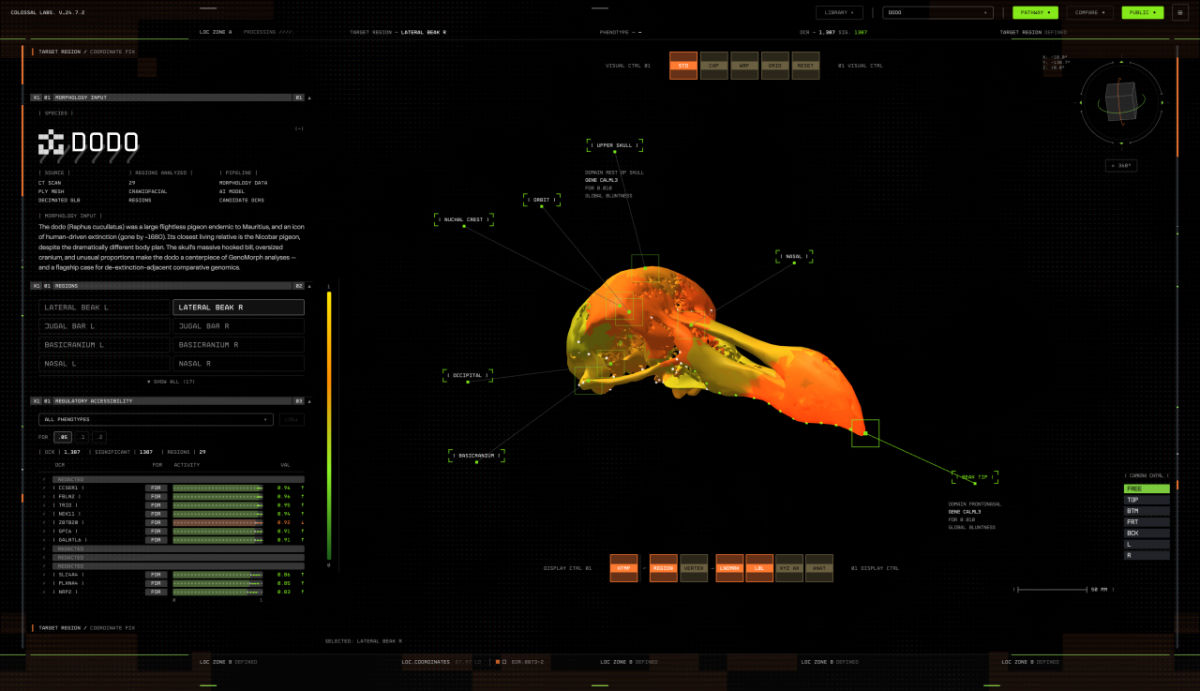
Colossal Biosciences announced a new artificial intelligence system called GenoMorph that is designed to speed up its de‑extinction work. The platform was unveiled on Wednesday and is being applied to the effort to bring back the dodo, a species for which only a single high‑quality genome is available.
The Key Details
- GenoMorph uses 3D skull measurements, genetic data from more than 70 bird species, and developmental information from chickens, quail, ducks, and pigeons.
- The AI learns which DNA regions are active as birds develop beaks and facial features, then predicts which genetic switches likely produced the dodo’s distinctive appearance.
- So far the platform has highlighted roughly 2,300 DNA editing targets related to the dodo’s cranial and facial morphology that can be tested in the lab.
- To test those edits quickly, Colossal has built a delivery system that uses lipid nanoparticles to introduce gene‑editing tools directly into developing bird embryos, avoiding the need to wait for birds to reach sexual maturity.
- The company’s Nicobar pigeon colony, the dodo’s closest living relative, now contains 36 birds and has produced the essential cells that become eggs and sperm, a step needed to transfer dodo traits.
- Peter Diamandis, founder of XPRIZE and an investor in Colossal, announced the creation of NeoGenesis Capital, a venture fund that will invest in startups employing Colossal’s programmable biology platform across health, agriculture, and conservation.
Why It Matters
De‑extinction projects are often hampered by scarce genetic material. By narrowing the search space to the most promising genetic changes, GenoMorph could reduce the trial‑and‑error workload in the lab and make the process more efficient. The platform also illustrates how AI can be combined with developmental biology to tackle problems where traditional comparative genomics falls short.
What It Means for Readers
For anyone interested in biotechnology, conservation, or the future of synthetic biology, the announcement shows a concrete example of how machine learning is being used to interpret limited biological data. The advances in embryo editing delivery could also be relevant to broader gene‑therapy research, while the new venture fund signals growing investor confidence in programmable biology as a cross‑sector technology.
What Happens Next
Colossal plans to laboratory‑test the 2,300 candidate edits identified by GenoMorph to see whether they produce the desired physical traits in bird embryos. Successful validation would move the dodo project closer to a proof‑of‑concept stage. Meanwhile, NeoGenesis Capital will begin evaluating startups that wish to use Colossal’s programmable biology tools for applications beyond de‑extinction.
VANTIX Takeaway
The GenoMorph platform demonstrates how focused AI can turn a genetic‑data shortage into a tractable engineering problem, potentially accelerating not only de‑extinction but also other precision‑biology endeavors.


