# What Happened
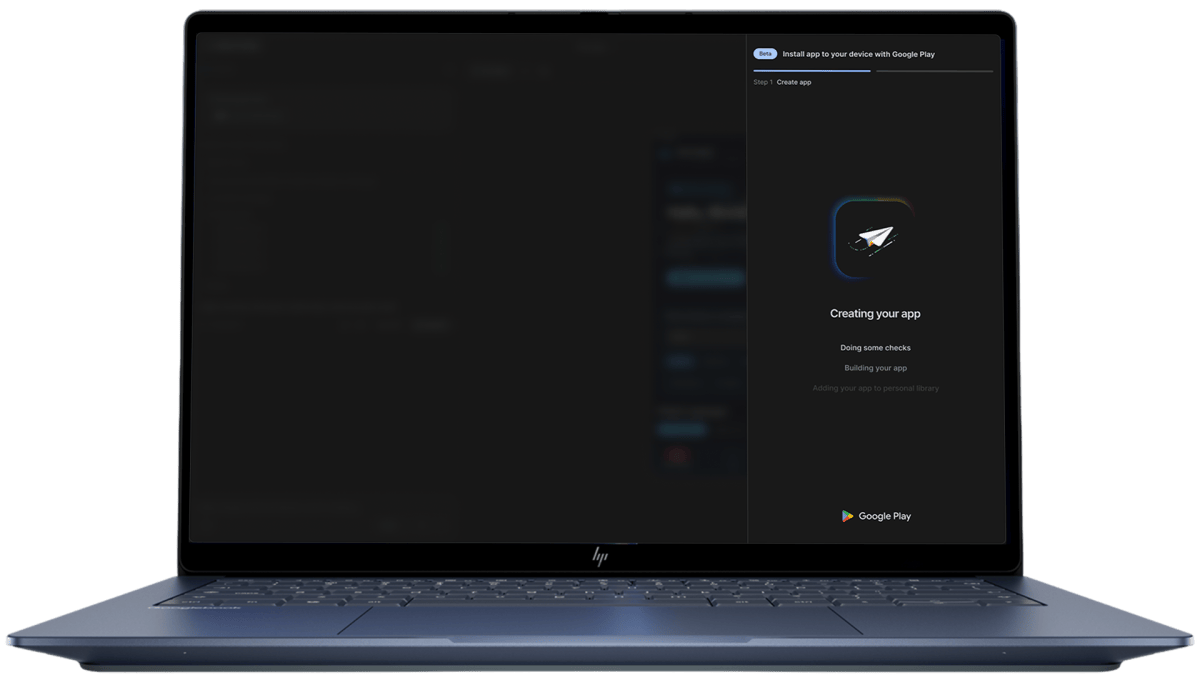
Google has introduced a new feature on Google Play that allows Android device owners to build and run private applications created with AI, without publishing them to the public Play Store. The feature, initially available to users in the United States aged 18 and up, enables what Google calls "vibe-coded" apps—personal applications built for individual needs using AI tools like Google AI Studio. These apps remain completely private, not appearing in Google Play's search or listing pages and visible only to their creator. The announcement was made on Tuesday, October 13, 2026.
# The Key Details
- Private app capability: Users can launch personal apps on their Android devices via Google Play using their standard Google account. These apps do not appear in public search results or listing pages and are not shared with anyone except the app's creator.
- Initial availability: The feature launches initially in the U.S. for users aged 18 and up.
- Compliance requirements: Personal apps built through this feature are still required to comply with Google Play's existing policies.
- Future sharing options: In the months ahead, Google plans to enable users to share their vibe-coded creations with a network of trusted friends, such as family or small groups like a child's T-ball league, without going public on the Play Store.
- Path to public publication: If an app gains popularity, there will be a way to shift it from a personal app to one published on the Google Play Store for everyone, after completing trust and safety reviews.
- AI-assisted app development: The feature connects with Google AI Studio, allowing users to vibe-code apps for their own use.
- Gaming-related updates: Google also announced several gaming features, including Game Finder—a personalized game recommendation engine based on user preferences and Google's knowledge from its 1.2 billion player community; a Community Posts section for game-related questions; 48-hour gaming challenges called Sprints; and updates to the Ask Play AI assistant that now offer comparisons between similar applications. Google Play apps and games will also be more deeply integrated into Gemini's conversations.
- Age-range feature: The Play Store will support an age-range feature allowing parents to share their child's age range (but not exact birthdate) with developers for age-appropriate experiences.
# Why It Matters
This development matters because it lowers the barrier between idea and application for individuals who want to build tools for personal or small-group use without navigating the full public deployment process of the Google Play Store. Previously, anyone experimenting with AI-assisted app creation who wanted to run their app on an Android device had to publish it to the Play Store, exposing it to its 3 billion users. Many therefore limited their vibe-coding efforts to web apps instead of native Android applications.
The new feature addresses this by allowing private deployment. Users can build an app with AI for a specific purpose—a personal productivity tool, a family organizer, a game for friends—and run it on their device immediately. The compliance-with-policies requirement also means users aren't completely bypassing safety checks, even though the app remains private.
The future sharing capability, limited to trusted networks, strikes a middle ground between complete privacy and full public distribution. The pathway to public publication, should an app prove popular, provides a natural growth route for successful personal projects.
# What It Means for Readers
For everyday technology users: This means it is now possible to create and use custom Android applications without technical development expertise or the need to sideload apps from unofficial sources. If you have a specific need that existing apps don't meet, you can now build a solution using AI.
For smartphone buyers: The feature adds another dimension to the Android ecosystem's flexibility. A device's value increasingly depends on the software tools available on it, and Google Play's evolution as a platform for personal software creation broadens what an Android phone can do for its owner.
For developers: This is not a replacement for traditional app development and distribution. Rather, it is a new channel for prototyping, personal tools, and small-circle sharing. Professional developers building public-facing apps will continue to follow the standard Play Store submission process.
For creators: Artists, writers, and other creators who want to build simple, personalized apps for their audience or community now have a low-friction pathway. The eventual ability to transition from private to public distribution means a successful personal project could reach a wider audience.
For technology enthusiasts: This represents another step in the integration of AI into everyday software workflows. The ability to go from AI-assisted concept to running application on one's own device in minutes demonstrates how quickly the tools of software creation are becoming accessible to non-specialists.
For African users and markets: The supplied material does not contain information about availability, pricing, or reception in African markets. The feature is initially rolling out to U.S. users. Readers in Africa should watch for future announcements regarding regional availability.
# What Happens Next
In the months ahead, Google plans to roll out the ability for users to share their vibe-coded creations with trusted networks of friends and family. The company is also building better ways to curate the Google Play experience, including the Game Finder personalized recommendation engine (first available in the U.S. in English), updates to Ask Play for app comparisons, deeper integration with Gemini, and the age-range feature for parental controls. Users should watch for these updates through Google Play store settings.
# VANTIX Takeaway
After reading this, the most important thing to understand is that Google Play has evolved from a marketplace where "there's an app for that" to a platform where "there's an app for me." The new private vibe-coding feature means that anyone with an Android device and a Google account can now build and run personal applications created with AI, keeping them private by default while retaining a pathway to public distribution if desired. This shifts the barrier to app creation from technical development skills to AI-assisted ideation, potentially expanding who can build software tools for personal or small-group use.


