What Happened
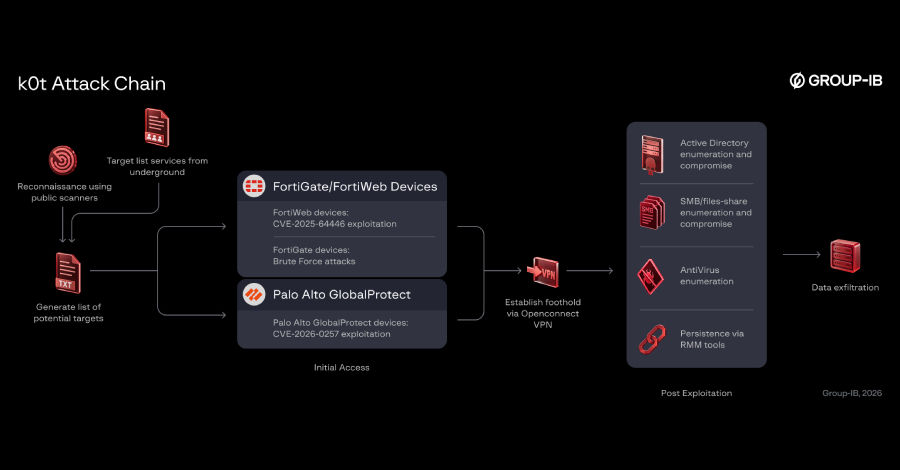
Cybersecurity researchers have disclosed details regarding a widespread attack campaign targeting perimeter network devices used by organizations globally. The threat actors focused on exposed enterprise edge hardware, specifically Fortinet FortiGate firewalls and Palo Alto Networks GlobalProtect VPN systems, exposing over 70,000 credentials in the process.
The Key Details
- Targeted Devices: The attack campaign specifically targeted edge infrastructure, including Fortinet FortiGate firewalls and Palo Alto Networks GlobalProtect appliances.
- Extent of the Exposure: Investigators discovered that operators obtained access to numerous organizations around the world, stealing over 70,000 credentials.
- Deeper Penetration Attempts: Artifacts from the ongoing investigation reveal that after gaining initial entry, attackers attempted to further breach internal systems within victim organizations.
Why It Matters
Network edge devices like firewalls and VPN gateways serve as the outer shield for enterprise networks. When these perimeter systems are breached, attackers gain privileged access to internal network traffic, sensitive corporate files, and employee user accounts without needing to bypass individual desktop defenses.
What It Means for Readers
- For IT and Cybersecurity Teams: Security administrators utilizing Fortinet or Palo Alto Networks edge hardware should immediately conduct security audits, review authentication logs, enforce strict multi-factor authentication (MFA), and ensure firmware patches are up to date.
- For Businesses: Organizations relying on remote access tools should verify credential integrity and reset exposed accounts to prevent unauthorized access.
VANTIX Takeaway
Edge hardware remains a primary target for sophisticated threat actors looking for direct access into corporate networks. Keeping perimeter security infrastructure patched, monitored, and secured with multi-factor authentication is critical to preventing large-scale corporate breaches.


