# Running AI on your own machine: one writer's privacy-driven experiment
The Verge's Antonio G. Di Benedetto has begun publishing a testing diary about something that has long been a barrier for many people: using artificial intelligence without handing personal data over to cloud providers. His conclusion so far is mixed — local AI can handle real work, but it is not yet a reliable assistant.
What happened
Di Benedetto decided to stop hesitating and actually use AI regularly. His main objection to cloud-based AI tools has always been privacy: giving "my most personal data to cloud services" felt like too large a trade-off. With local AI, the models run on the user's own hardware, so sensitive information never leaves the machine.
He is documenting the journey on The Verge, including what works, what fails, and whether the hardware investment is justified.
The key details
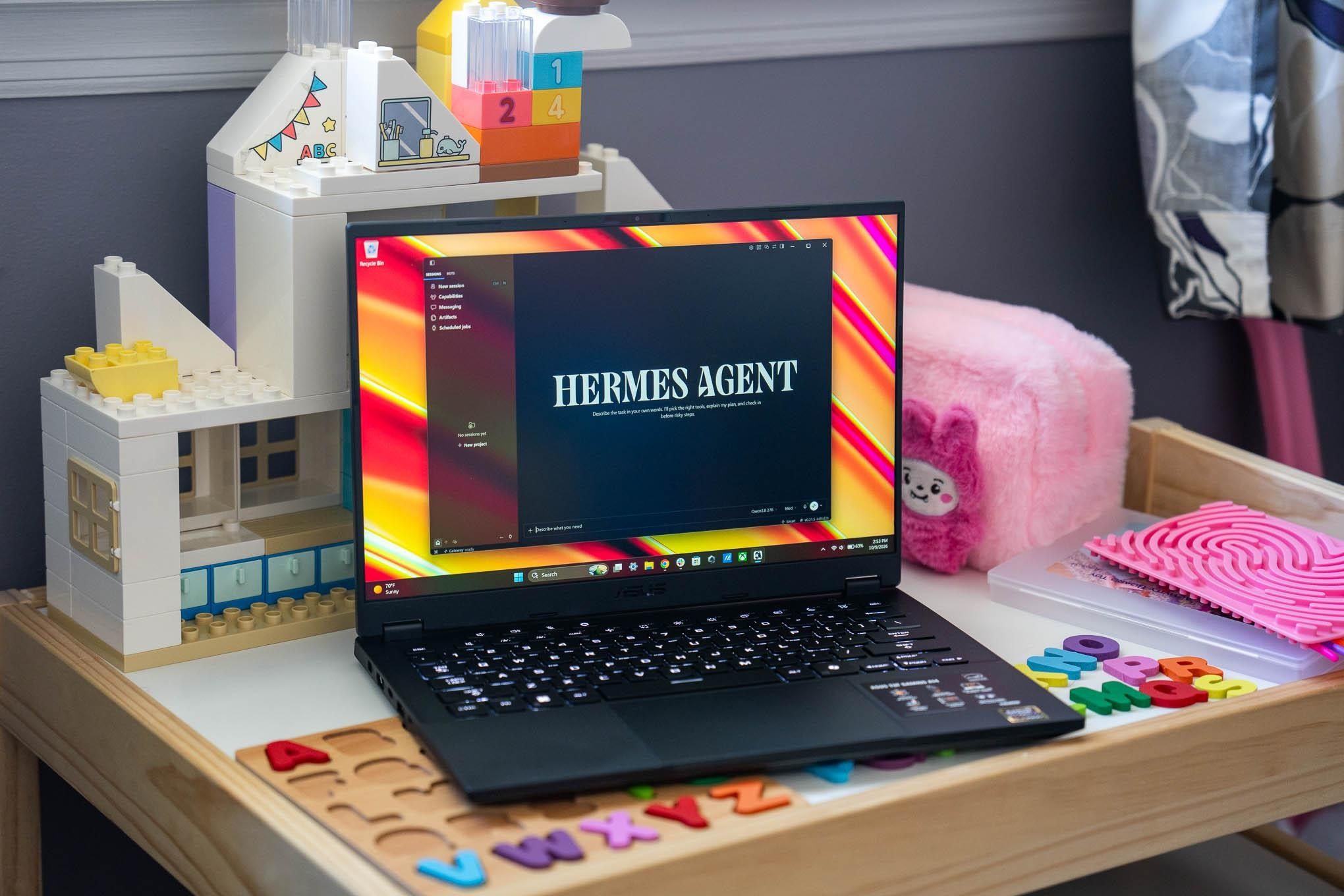
The hardware. He is testing primarily on an M5 Ultra Mac Studio with 256GB of unified memory, which he says is enough to run almost any model. He also plans to experiment on an M6 Mac Mini, an M5 MacBook Air, an Asus TUF Gaming A14 with an AMD Strix Halo processor, and eventually machines built around NVIDIA's RTX Spark platform. The latter are new Windows machines shipping with up to 128GB of RAM, explicitly aimed at agentic AI workloads.
The software. He installed Hermes, an open-source, self-hosted AI agent desktop application that runs on macOS, Windows, and Linux. It is free to use as long as you stick to local models. Hermes can even be controlled remotely via a Telegram bot.
The model. He started with Qwen 3.8 Flash Next, a 125-billion parameter model that takes up roughly 105GB of storage. The general rule he observed: models with many billions of parameters can do more than smaller ones with only a few billion. Because running locally removes per-use token costs, he chose to start big.
Why this matters
The broader context is that local AI is becoming a serious product pitch. Apple is highlighting local AI performance on its new Mac desktops, and hardware makers are shipping machines with large amounts of RAM specifically for AI agents. The appeal is straightforward: a gofer that lives on your desk, answers only to you, and does not report to OpenAI, Google, Microsoft, or Anthropic.
For users who will not upload financial records, embargoed product information, or personal correspondence to a third-party service, local AI is often the only way they can use the technology at all. That is the difference between using the tool and not using it.
What worked, and what didn't
Di Benedetto tried several tasks, with mixed results.
It worked:
- Steam library reorganization. With over 400 games and no built-in categorization, he asked Hermes to sort them by genre while preserving his own custom categories. After registering a Steam web API key — which he revoked immediately afterward — the agent sorted the library in a few minutes.
- Data analysis. He had the model crunch financial records and produce a spec-comparison spreadsheet for a new laptop under embargo. Both tasks required keeping the data on his own machine.
- Daily briefing. A morning summary that scans email, calendar, and weather eventually worked — after he realized macOS had to stay awake when the job fired at 7:30am.
It did not work reliably:
- The daily briefing broke multiple times.
- Automating laptop benchmark tests — running a dozen or more tests three times each to average them — is still a work in progress, despite the agent producing Python scripts.
The overall picture is that even powerful local models are not a magical assistant. They can do heavy lifting, but they still require supervision and debugging.
What remains unclear
Di Benedetto is still early in the process. He does not yet know how much of the automation he wants will hold up over time, or how much of it can be done on more modest hardware. The 105GB Qwen model, for example, is not something most machines can run.
He also notes that the sheer number of available models is itself a problem — there are more than he can count, and many are specialized for particular uses.
What happens next
The testing diary is ongoing. He plans to try smaller Qwen models on lower-memory devices, continue refining the automation scripts, and keep a cautious, skeptical stance. He describes Hermes and local AI as a tool to run on his computer, not a digital friend — and he intends to stay vigilant as he learns what the technology can actually do.
VANTIX Takeaway
Local AI is no longer theoretical, but it is not yet turnkey. The privacy benefit is real and may be the deciding factor for anyone handling sensitive data. The practical takeaway: expect to do setup, debugging, and supervision yourself. If you are willing to invest that time, local AI can handle genuinely useful tasks today. If you expect a fully reliable personal assistant, it is not there yet.


