What Happened
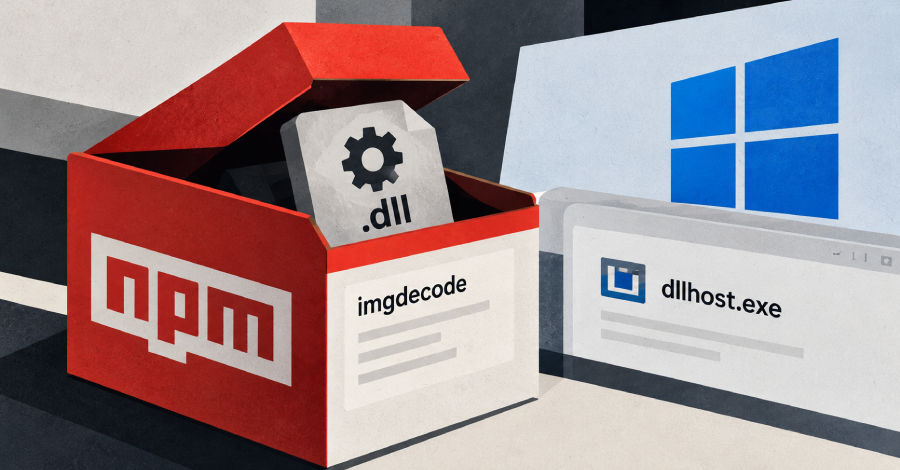
Cybersecurity researchers have detected a malicious package active on the npm package registry. The package, published under the name `imgdecode`, is associated with a supply chain attack campaign dubbed MALFEX.
According to research data, the package was uploaded on September 30, 2026, by a user account operating under the handle `malfexteste8`. Prior to its discovery, the library recorded 979 downloads.
The Key Details
- Package Name: `imgdecode`
- Uploader Account: `malfexteste8`
- Publication Date: September 30, 2026
- Download Count: 979 downloads
- Attack Vector: Embedded shellcode loader disguised within a compiled Windows native addon
By hiding the malicious payload within a native C/C++ extension (`.node` binary addon) rather than standard JavaScript code, the package aims to bypass automated static code analysis tools that primarily scan script files.
Why It Matters
Supply chain attacks leveraging open-source registries like npm pose an ongoing threat to software developers and enterprises. Attackers frequently choose package names that mimic utility libraries or common helper functions—such as image decoding tools—to trick developers into installing them or including them as transitive dependencies.
Using compiled native binaries complicates detection, as security scanners that rely solely on inspecting source files may fail to inspect native execution modules.
What It Means for Developers
Developers using Node.js or managing JavaScript dependency trees should audit their project lockfiles for any reference to `imgdecode`. Any environment where this package was installed—particularly Windows-based development workstations or build servers—should be evaluated for unauthorized execution and potential credential exposure.
VANTIX Takeaway
The `imgdecode` package highlights the continuous evolution of supply chain threats on npm, specifically through the use of compiled binary components to conceal shellcode loaders. Teams should enforce software bill of materials (SBOM) checks, pin verified dependencies, and monitor project builds for unrecognized native addons.


