What Happened
Mosqitter is adding AI and environmental data analysis to its mosquito-trapping hardware, transforming the devices into an AI-powered surveillance network that can identify mosquito species, track population changes, and provide earlier warnings of mosquito-borne disease risks. The startup is presenting its Febris Monitoring System at TechCrunch's Startup Battlefield competition.
The Key Details
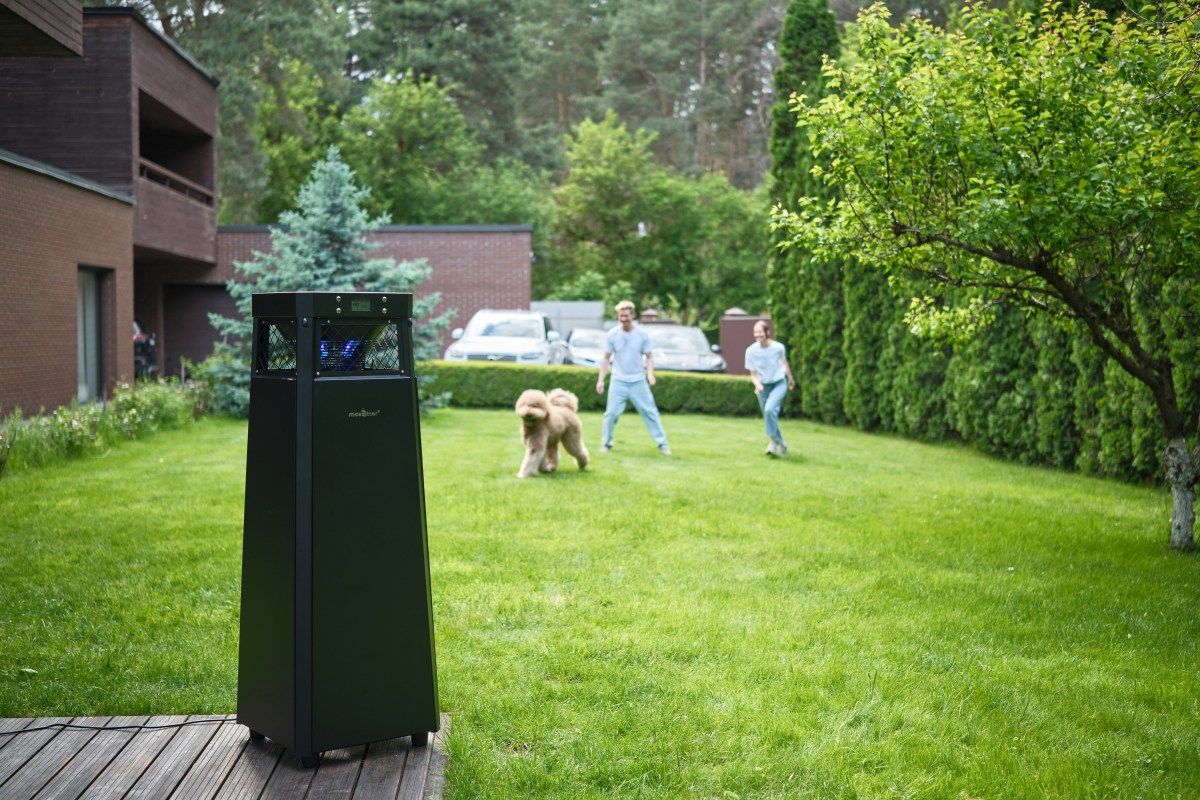
- Mosqitter builds chemical-free devices that lure and trap female mosquitoes by mimicking human heat, scent, and breathing cues
- The company has grown from just over 250 devices in 2022 to more than 5,000 operating across five continents
- Two product lines: Mosqitter Grand for larger areas and public spaces ($1,999), and Mosqitter Mini for residential spaces and portable monitoring ($199)
- The Febris Monitoring System, launching next month, adds a data layer to monitor mosquito populations and assess potential spread of mosquito-borne diseases - though it does not diagnose disease
- Mosqitter's computer-vision system analyzes biological characteristics to distinguish between species, with findings validated by entomologists and confidence scores assigned
- Environmental data including weather, wind, and humidity are fed into the system for population forecasting
- The company is seeking B2B partners globally, particularly distributors with relationships with governments and retailers
- Key markets include Brazil, the U.S., Greece, India, Ukraine, and Nigeria
- Sales approaches vary by region: Greece partners with established pest-control companies; U.S. sells Mini directly to consumers via Amazon and its website; U.K. Health Security Agency collaboration for airport deployments
- Mosqitter has built local manufacturing and sales operations in Brazil
- The company is raising $5 million in two tranches ($1 million initially, $4 million upon milestones), with to date $1.9 million raised
- Projected 2026 revenue exceeds $1 million; Febris data business could bring $3.5 million annually based on current contract bids
- Name "Mosqitter" combines "mosquito" and "eater," not "mosquito" and "quitter" as commonly assumed
Why It Matters
Mosquito-borne diseases are expanding into new territories due to rising temperatures, changing rainfall patterns, and global travel, with dengue cases more than doubling globally from 6.5 million in 2023 to 14.6 million in 2024 according to the WHO. Mosqitter's approach addresses this by creating a continuous monitoring network that can identify mosquito species and population changes before disease outbreaks occur. The AI-powered system could enable earlier public health interventions, particularly in regions where mosquito surveillance is limited. The distinction between hardware sales and recurring data services also represents a business model innovation in vector control technology.
What It Means for Readers
For technology enthusiasts, Mosqitter demonstrates how AI can be applied to environmental monitoring and public health challenges beyond traditional computing applications. For residents of mosquito-prone regions, the network could eventually provide more localized data on mosquito species and activity patterns. Public health officials and government agencies could potentially use the monitoring data to target control efforts more effectively. In African markets, where mosquito-borne diseases like dengue, malaria, and yellow fever remain significant health challenges, continuous surveillance data could support more responsive control strategies - though the article notes Mosqitter considers Nigeria a key market without detailing specific local implementations.
What Happens Next
Mosqitter plans to officially introduce the Febris Monitoring System next month, adding the data layer for population monitoring and disease risk assessment. The company is seeking B2B partners globally to expand distribution of both its hardware and monitoring services. With a $5 million funding round in progress, Mosqitter aims to reach $1 million in 2026 revenue and project $3.5 million in annual Febris data revenue based on current contract bids.
VANTIX Takeaway
After reading this, the most important thing to understand is that mosquito surveillance is evolving from reactive chemical control to AI-powered continuous monitoring - and that the same traps used to catch mosquitoes can also collect the data needed to predict and prevent disease outbreaks, potentially giving public health officials an earlier warning system for mosquito-borne illness risks.


