What Happened
A team of Spanish archaeologists has documented an unusually large collection of wooden tools made by Neanderthals at the Abric Romaní rock shelter in Capellades, west of Barcelona. The study, published in Science Advances, catalogs 597 wooden remains recovered from layers dating between 62,000 and 40,000 years ago.
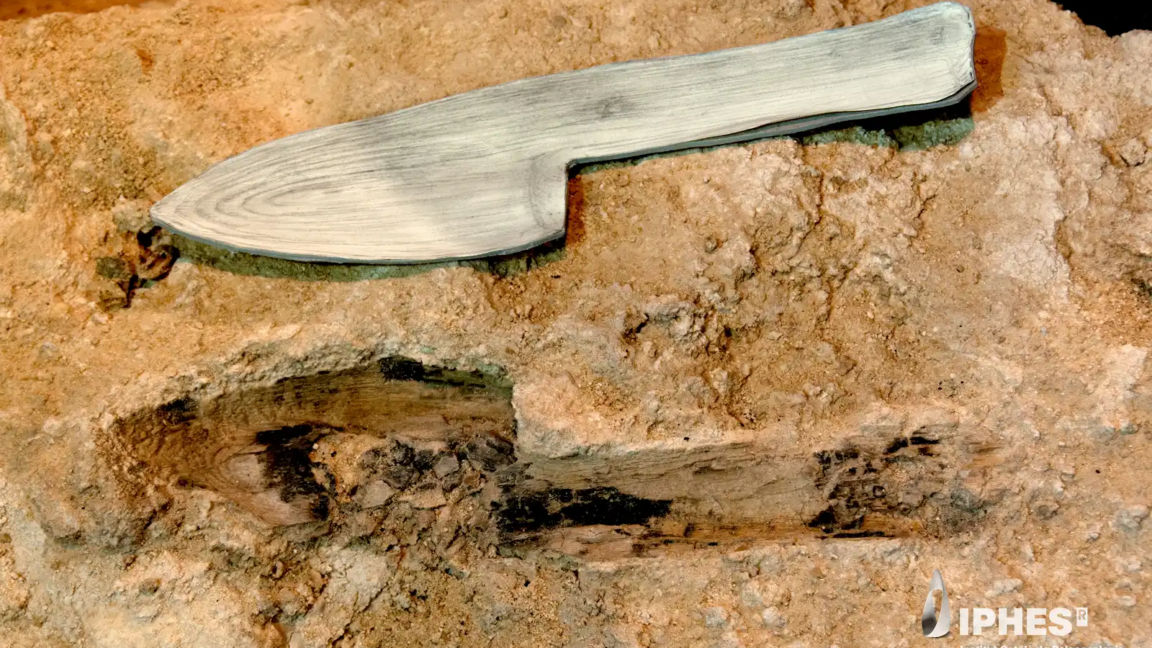
Unlike most ancient wooden artifacts, which are typically found in waterlogged environments that slow decay, these tools were preserved through a different process. Mineral-rich water coated the wooden objects in a limestone-like crust. When the wood eventually rotted away, it left behind hollow molds that faithfully retain the original shapes of the tools.
The Key Details
The Abric Romaní site is distinctive because it represents a long-term Neanderthal occupation area where people lived, slept, cooked, and made tools over roughly 20,000 years. This context provides insight into everyday Neanderthal behavior rather than isolated hunting events.
The wooden artifacts include:
- Spears
- Digging sticks
- Bark trays
- Parts of shelters
- A club with no known equivalent in the archaeological record
M. Gema Chacón, an archaeologist at the Catalan Institute of Human Paleoecology and Social Evolution (IPHES-CERCA) and co-author of the study, noted that the collection represents tools used for different subsistence activities, not just hunting. The presence of woodworking debris across multiple layers suggests that working with wood was routine for Neanderthals rather than occasional.
Why It Matters
Most of the oldest known wooden artifacts are weapons, such as spears from Schöningen in Germany, a spear tip from Clacton-on-Sea in England, and a spear found alongside an elephant skeleton in Lehringen, Germany. These finds primarily tell us about Neanderthal hunting practices.
The Abric Romaní collection is different. It shows that Neanderthals crafted and used a variety of wooden tools for daily living, including items that would have supported food preparation, shelter construction, and ground excavation. The discovery of a unique club also suggests symbolic or social behaviors that are not well documented elsewhere in the Neanderthal record.
What Remains Unknown
The study does not provide specific details about the exact functions of each artifact or how the tools were manufactured. Additionally, the preservation method, while effective at retaining shape, does not preserve organic surface details that might reveal more about tool-making techniques.
VANTIX Takeaway
The Abric Romaní findings reinforce growing evidence that Neanderthals were skilled and versatile toolmakers whose use of wood extended far beyond hunting. The variety and quantity of wooden artifacts suggest a level of daily life complexity that challenges older assumptions about Neanderthal capabilities.


