What Happened
Several high-profile technology executives are adopting the phrase "super intelligence" instead of "artificial intelligence" (AI) following rhetoric and policy directives from the White House.
President Donald Trump initiated the push to rebrand the technology, issuing an executive order requiring U.S. government agencies to adopt the term "super intelligence." The move has prompted prominent Silicon Valley leaders to align their public language, research announcements, and product branding with the administration's preferred terminology.
The Key Details
- Rhetoric and Mandates: The White House publicly targeted the continued use of "artificial intelligence," establishing "super intelligence" as the official preferred phrasing across federal agencies.
- Corporate Rebranding Moves:
- Elon Musk promised to rename SpaceXAI to "SpaceXSI." - Salesforce CEO Marc Benioff announced that Salesforce would rename its AIForce platform to "SIForce."
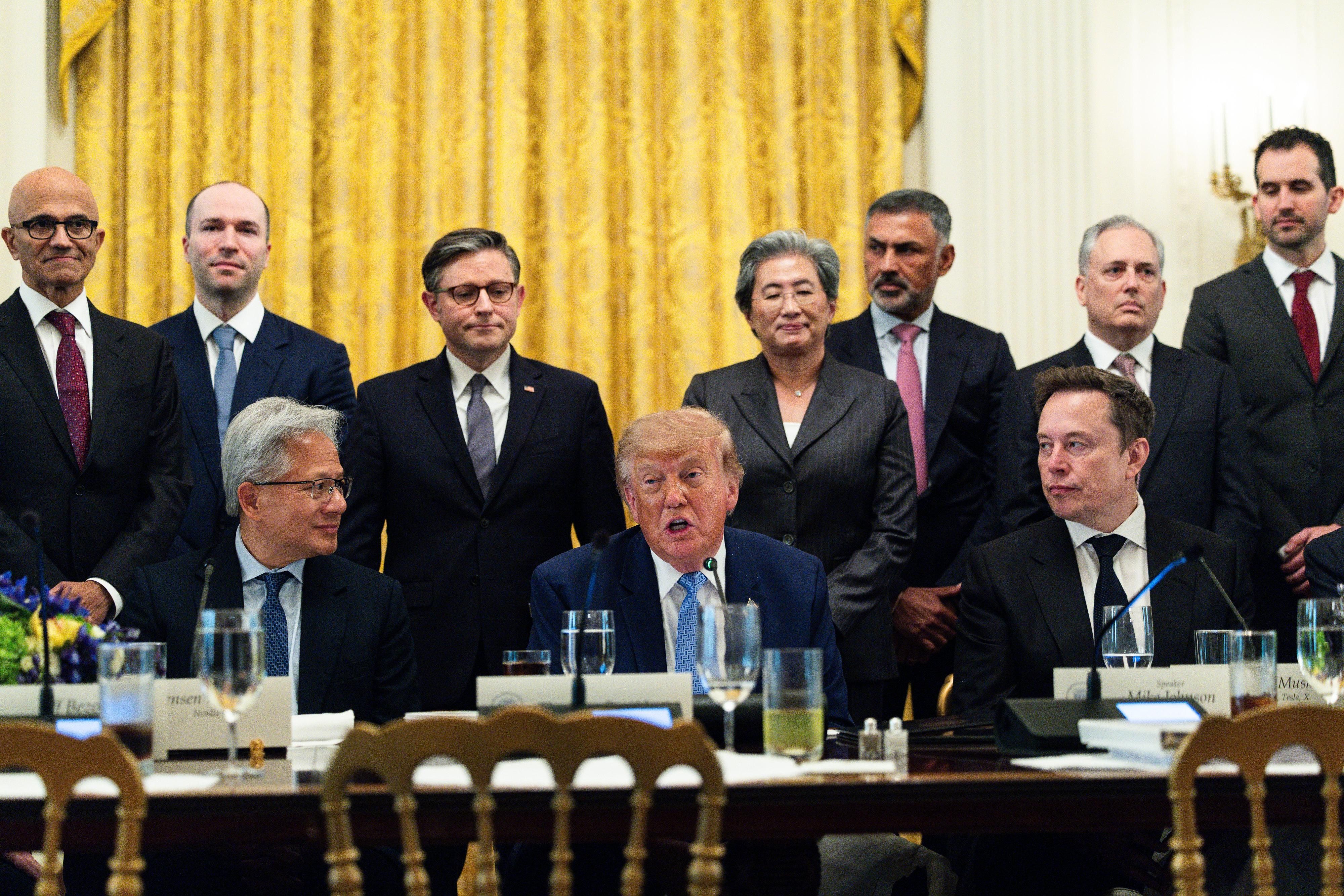
- Institutional Commitments: Nvidia CEO Jensen Huang attended the White House summit where the executive order was announced. Nvidia subsequently committed $1 billion toward scientific advancement, explicitly designating funds for "super intelligence research."
- Executive Adoption: Microsoft CEO Satya Nadella, who also attended the summit, repeatedly used the term "super intelligence" in a recent public post calling for safety measures and emergency controls for advanced systems.
- Industry Representation: The White House summit brought together prominent figures across the sector, including Sundar Pichai, Mark Zuckerberg, Jeff Bezos, Dario Amodei, Jensen Huang, Satya Nadella, and Elon Musk.
Why It Matters
The pivot illustrates the political and regulatory considerations shaping tech executive strategies. While the general public and technical communities largely continue using "artificial intelligence," major corporate leaders are adjusting their terminology to protect regulatory interests, preserve government contract opportunities, and maintain working relationships with federal leadership.
What It Means for Readers
For consumers, enterprise technology buyers, and developers, the shift represents a change in corporate messaging rather than a fundamental technical leap in AI architecture.
- Product Branding: Users can expect to see enterprise services, software platforms, and corporate press releases swap "AI" branding for "SI" terminology.
- Documentation: Federal grants, policy papers, and official government procurement guidelines will likely standardize around the term "super intelligence."
VANTIX Takeaway
The adoption of "super intelligence" by leading tech CEOs reflects strategic political alignment rather than an industry-wide technical redefinition. While everyday usage remains anchored in AI, Silicon Valley's major players are demonstrating a willingness to adjust public language to safeguard their broader business interests.


