# What Happened
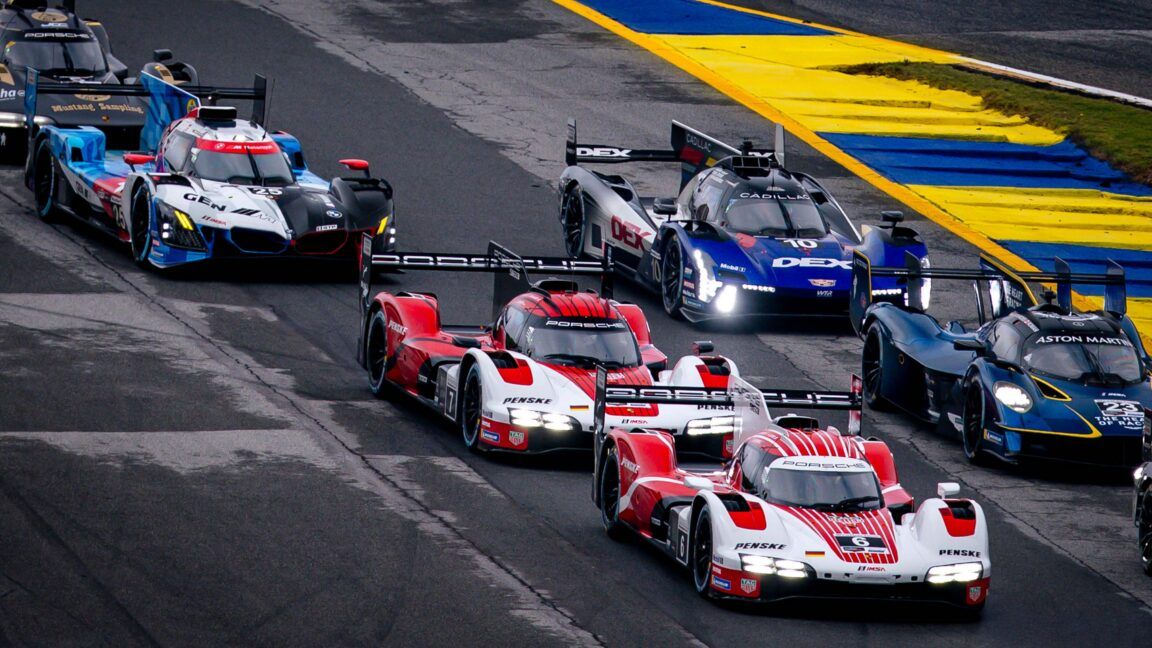
IMSA’s 2026 season concluded at Road Atlanta in Georgia with the 10‑hour Petit Le Mans race. Victory went to one of the two Porsche 963 prototypes, marking Porsche’s first overall prototype win at the event. The race was affected by weather, resulting in numerous cautions and extended safety‑car periods.
# The Key Details
- IMSA’s domestic audience grew by more than a third and its international audience by almost a quarter in the past year, driven by streaming‑friendly multi‑class racing and open paddock access.
- Manufacturer commitments are shifting: Porsche cut its factory prototype programme in half, Alpine is retiring from the World Endurance Championship, and Acura is ending its GTP effort in IMSA to focus on IndyCar.
- New entrants are arriving: Genesis joined the WEC, and Ford and McLaren are set to join the WEC in the next year.
- The series is debating the future of technical regulations. Currently, IMSA uses the LMDh rule set (common hybrid systems, gearboxes, and prescribed chassis) while the WEC runs Hypercar rules (greater technical freedom). Stakeholders agree that from 2030, when the current rulesets expire, a single set of regulations should be adopted.
- IMSA Labs is making the vast amounts of data generated during races available to researchers and developers for software development, AI, predictive analysis, and business solutions.
- OEM representatives have told IMSA that lessons from the hybrid systems on GTP cars are being applied directly to road‑car vehicle development, citing examples such as Porsche’s T‑hybrid engine derived from its 919 Hybrid race car.
# Why It Matters
The move toward a unified regulatory framework by 2030 could reduce complexity and cost for manufacturers, encouraging broader participation in endurance racing. At the same time, making race data openly available creates a real‑world testbed for software engineers and data scientists to build and validate AI models, predictive analytics, and other technology solutions outside of traditional automotive labs.
# What It Means for Readers
For developers and technology enthusiasts, the IMSA data initiative offers a concrete opportunity to work with high‑frequency, high‑volume telemetry from a controlled racing environment. This can be useful for experimenting with machine‑learning models, real‑time data processing, or simulation tools that later might find application in road‑vehicle systems or industrial automation.
The confirmation that hybrid‑system learnings from GTP cars are feeding into road‑car development underscores how motorsport can act as a proving ground for efficiency‑focused technologies that may eventually appear in consumer vehicles.
# What Happens Next
IMSA expects the next generation of rules to evolve from the current LMDh framework, with manufacturers seeing value in a cost‑effective, stable platform. The target date for a single, unified regulation set across IMSA and WEC is 2030, contingent on ongoing talks among stakeholders.
Meanwhile, IMSA Labs will continue to provide access to race data, inviting researchers, start‑ups, and established firms to explore software‑based innovations, AI applications, and predictive analysis using the information collected during events.
# VANTIX Takeaway
The future of prototype racing is being shaped not only by hardware stability but also by the growing role of software and data—offering a tangible arena where automotive engineering and advanced computing intersect.


