# What Happened
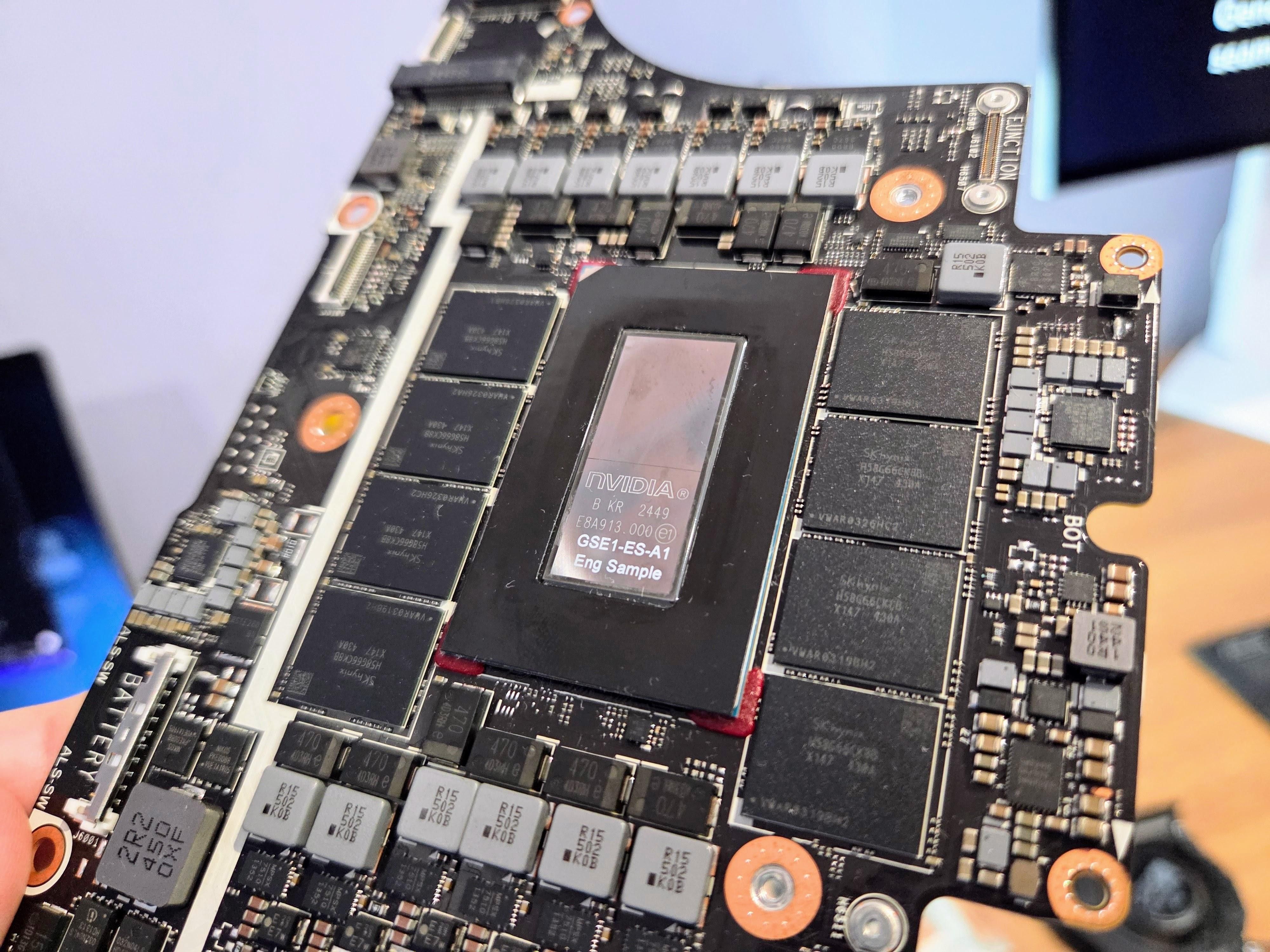
Nvidia is launching RTX Spark laptops this Friday, October 16th, marking the latest effort to make Arm-based Windows PCs viable for mainstream users. The company claims these laptops can run 'everything'—Adobe Creative Suite, Microsoft Office, Blender, and even games that require kernel-level anti-cheat—on Arm architecture that previously couldn't execute existing Windows applications.
# The Key Details
The RTX Spark 'superchip' is the same silicon Nvidia placed in AI developer mini-desktops a year ago, but now running full Windows 11. Microsoft's Prism emulator enables older Windows apps and games to operate on the Arm chip.
Pricing is substantial: configurations start at $2,600 for a cut-down Nvidia N1X with 18 CPU cores and 5,120 GPU cores and 24GB of memory. $3,700 secures the full complement of 20 CPU cores and 6,144 GPU cores, while $5,900 gets 128GB of unified memory for larger local AI models.
Anti-cheat support represents a significant claim. Nvidia says it already supports the anti-cheat software used in Fortnite, Roblox, Rust, Rainbow Six Siege, and MapleStory—titles previously incompatible with Valve's SteamOS. Additionally, Nvidia states that anti-cheat for Call of Duty, PUBG, League of Legends, Valorant, Apex Legends, Battlefield, and many EA Sports titles are 'officially coming to RTX Spark later.'
Performance varies by game type. Nvidia's Blackwell GPU, the same found in traditional laptops, enables smooth 1080p performance in graphics-limited titles like Cyberpunk 2077. The native resolution of these laptops (1800p or 2180p) can be reached with low or medium settings and DLSS upscaling. However, 'CPU-limited' games struggle: The Verge's Tom Warren couldn't run Horizon Zero Dawn Remastered above 30fps, and Antonio Di Benedetto couldn't break 30fps on Assassin's Creed Shadows—where a MacBook Pro M5 Max ran the game twice as fast.
Nvidia officially claims 135fps at 1440p for select titles including 007 First Light, Cyberpunk, Gears of War: E-Day, Doom: The Dark Ages, Naraka: Bladepoint, and Pragmata—but this requires DLSS and 3x frame generation, meaning two 'fake' frames are generated for every real one. Results may also use Nvidia's faster new frame generation model with reduced image quality.
# Why It Matters
This launch represents the most ambitious attempt yet to solve the fundamental problem that doomed the original Microsoft Surface fourteen years ago: making Arm-based Windows PCs compatible with the full breadth of Windows software. Previous efforts by Apple (Rosetta 2), Qualcomm, and Valve (SteamOS) made progress but faced limitations, particularly with anti-cheat and CPU-dependent games. Nvidia's substantial GPU expertise could be the differentiating factor that finally broadens what Arm Windows PCs can do.
# What It Means for Readers
For gamers: RTX Spark could offer a significantly better Windows on Arm gaming experience than previous attempts, though the high entry price remains a barrier. The Blackwell GPU's native compatibility with traditional laptop graphics means many games 'just work' without translation overhead.
For creators: The ability to run Adobe Creative Suite and Blender on an Arm laptop could be meaningful for professionals seeking alternatives to Intel-based machines, though the $2,600+ price point limits immediate relevance.
For general users: More Windows applications may become available on Arm devices, but at prices that position these machines as premium, niche products rather than mainstream replacements.
No specific African or Nigerian relevance is evident in the supplied material; this is a global technology development.
# What Happens Next
Nvidia says RTX Spark is a family of products with lower-cost versions in development. Early review units are already in journalists' hands, with The Verge writing this story from one of the review laptops. Full embargo lifts tomorrow with additional thoughts on early pros, cons, and quirks. As Nvidia's work influences the broader ecosystem, it may help make future Qualcomm machines better—The Verge notes 'the rising tide of Arm lifts all its boats.' Growing pains from early adopters may be ironed out over time.
# VANTIX Takeaway
After reading this, the most important thing to understand is that Nvidia is betting its substantial GPU expertise can finally make Arm-based Windows PCs practical for mainstream users—but at prices that put them out of reach for most consumers today, and with the caveat that not all games will perform equally depending on whether they're CPU- or graphics-limited.


