# What Happened
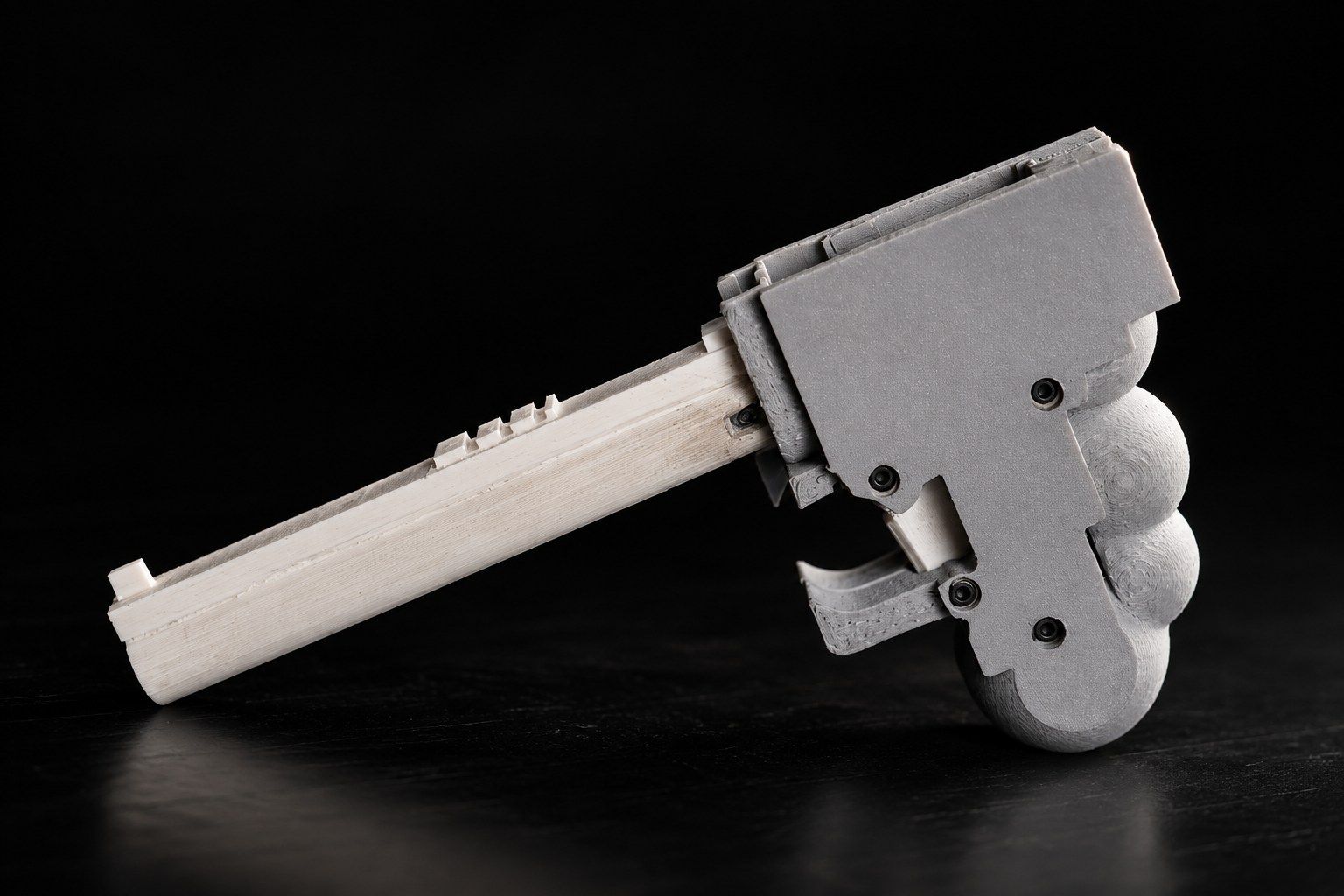
Cody Wilson, the gun‑rights activist who created the first 3‑D‑printed firearm 13 years ago, has now introduced what he calls “the first AI‑made gun.” Named the WASP, the .22‑caliber handgun was designed by his custom AI model, GatGPT, and printed on a Bambu Lab printer outside Defense Distributed’s headquarters in Austin, Texas. The device is little more than a pistol barrel attached to a spring‑loaded plastic box, with a bubbly grip that does not fit a human hand. Wilson and a colleague clamped the prototype to a DIY test mount and conducted three shots: the first misfired, the second struck a cardboard target, and the third missed high.
# The Key Details
- Design & Appearance: The WASP resembles Wilson’s earlier single‑shot “Liberator” but includes AI‑generated oddities such as a three‑lobed, grooved grip and an open trigger guard. The AI listed six key changes from the “Ergo Harlot” inspiration, including a longer barrel.
- AI Model: GatGPT is trained on DEFCAD’s expansive library of gun files (the world’s largest digital gun repository, launched in 2012). It answers firearms‑related prompts and helps users select parts for builds.
- Printing Process: The gun was printed using standard plastic filaments and common metal parts for the firing pin and barrel. The print took roughly six hours.
- Test Results: Two of three shots fired successfully; the first attempt produced only a click, indicating a misfire. Wilson performed quick troubleshooting before the second successful shot.
- Expert Commentary:
- Ashley Hlebinsky (firearms historian) noted missing trigger guard and an inverted grip, likening it to AI‑generated drawings with obvious errors. - Jonathan Ferguson (Royal Armouries Museum) called the firearm legally viable but technically unsound, citing vestigial sights and poor ergonomics.
- Safety & Advocacy Reaction: Everytown senior vice president Justin Wagner said Wilson’s goal is to “lower the barrier to entry so anyone… can own a gun,” calling the development dangerous.
- Regulatory Context: New York and California have passed laws requiring 3‑D‑printer manufacturers to install firearm‑blocking software. Wilson released a tool called “Hochulization” that subtly alters a file’s hash to evade detection; users reported more than 26,000 applications by late September.
- Legal Stance: Wilson maintains that gun files are protected speech and that the WASP exists first as a “digital organism” rather than a physical weapon.
# Why It Matters
The WASP demonstrates that AI can now produce functional firearm designs without the technical expertise traditionally required for 3‑D‑printed guns. This lowers the barrier for creating untraceable “ghost guns,” potentially increasing their prevalence. The emergence of AI‑generated designs also challenges emerging detection software, as new hashes and unconventional geometries may evade existing filters. Moreover, the case reinforces the ongoing legal debate over whether digital gun files constitute protected speech under the First Amendment.
# What It Means for Readers
- Everyday Users & Gun Buyers: The technology could make it easier for individuals to produce firearms at home, bypassing background‑check systems.
- Policymakers & Regulators: New detection methods and legal frameworks must account for AI‑generated designs that lack serial numbers and change rapidly.
- Developers & AI Researchers: The case highlights ethical considerations when AI models are trained on potentially harmful datasets and used to create weapons.
- Gun‑Safety Advocates: The development underscores the urgency of strengthening measures to prevent untraceable firearms from entering circulation.
- African Markets: No direct relevance; the story is global in scope.
# What Happens Next
Wilson expects GatGPT to improve as the DEFCAD database grows and as users interact with the model. He predicts faster design cycles and more sophisticated AI‑generated firearms. Meanwhile, regulators in New York and California will implement blocking software, and Wilson’s evasion tools may continue to be refined, setting the stage for an evolving technological and legal battle over AI‑designed weapons.
# VANTIX Takeaway
AI has moved from concept to reality in the weapons space: Cody Wilson’s WASP shows that generative models can now design functional firearms, potentially bypassing detection and lowering the technical barrier to gun ownership. The development raises urgent safety, regulatory, and ethical questions that will shape how societies control untraceable weapons in the coming years.


