What happened
Hardware teams in Nairobi and Lagos can now order printed circuit boards, machined enclosures and printed packaging and receive them within a month. Despite that progress, the final assembly of many devices still stalls because of long, hollow, open‑section plastic components. Cable ducts, edge trims, draw runners and irrigation channels are all made by plastic extrusion, and local capacity for those parts remains limited.
Why plastic extrusion matters
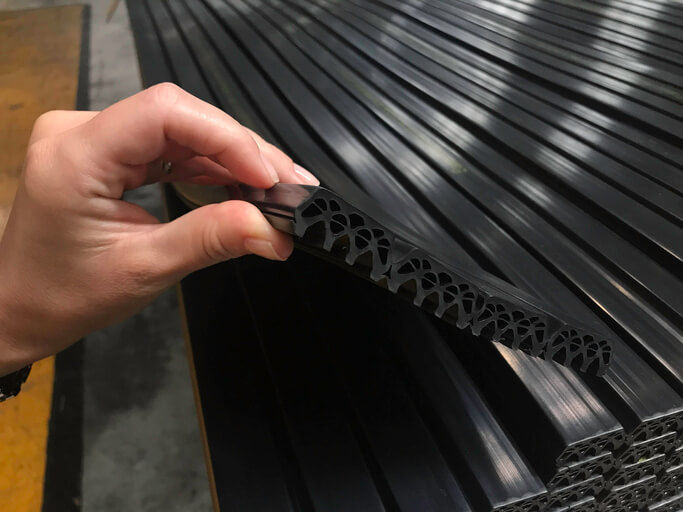
Plastic extrusion is a continuous process that pushes melted polymer through a shaped die to create long profiles with a constant cross‑section. Unlike injection moulding, which produces discrete three‑dimensional parts, extrusion creates the linear channels, seals and structural ribs that hold a device together. When a startup cannot source the right profile locally, it must either import the parts, adding cost, lead time and customs complexity, or redesign the product to avoid extruded components altogether.
The African context
The article highlights Nairobi and Lagos as examples of cities where other manufacturing steps have become accessible. PCB fabrication, CNC machining and carton printing have all developed local or regional supply chains that can turn around orders in weeks. Plastic extrusion, however, requires specialised tooling, consistent polymer supply and skilled operators. Those capabilities have not yet grown at the same pace, leaving a gap that directly affects time‑to‑market for hardware ventures across the continent.
What remains unclear
The source does not specify which polymers are most in demand, whether any local extrusion firms are expanding capacity, or what policy measures might accelerate the sector. It also does not quantify the typical delay caused by the extrusion bottleneck or compare costs between local and imported profiles.
The bigger picture
Hardware innovation in Africa often focuses on the electronic and mechanical cleverness of a product. The extrusion bottleneck shows that scaling a physical product depends on the entire bill of materials, including the seemingly mundane plastic profiles that hold everything together. Closing this gap could unlock faster iteration cycles for startups building everything from agricultural sensors to consumer electronics.


