What Happened
While venture capital continues to flood into voice AI startups, industry executives argue that the technology has yet to achieve a seamless, transformative breakthrough comparable to ChatGPT. Despite recent milestones like full-duplex speech models—which can speak and listen simultaneously—voice interfaces continue to face significant technical hurdles.
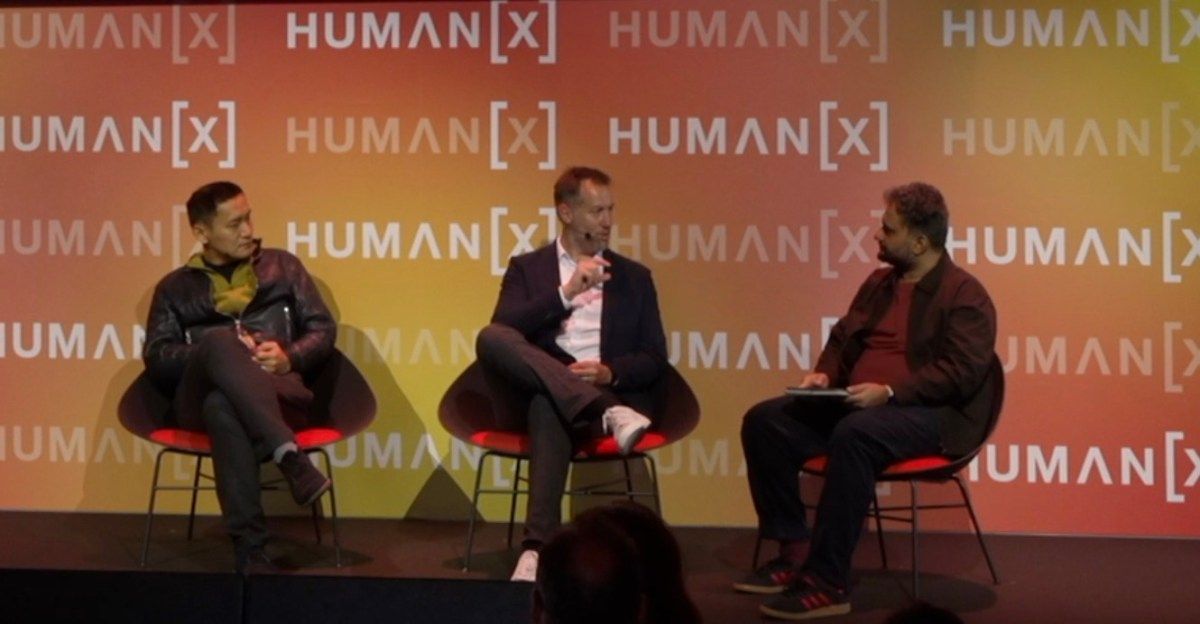
Speaking at the HumanX conference, Shawn Wen, Chief Technology Officer at PolyAI, and Alex Gay, Chief Marketing Officer at Otter, outlined why current voice systems still struggle with basic comprehension, processing speed, and user trust.
The Key Details
- Reasoning Speed Bottlenecks: Although full-duplex systems allow for natural turn-taking, models still struggle with fast reasoning. Delaying answer retrieval makes real-time conversations feel awkward or robotic.
- The Speech Recognition Paradox: Automatic Speech Recognition (ASR) layers frequently miss crucial keywords. Because transcription forms the foundation for summaries and automated tasks, an initial transcription error corrupts every subsequent step in the workflow.
- Building Trust Through Consistency: Enterprise voice tools require immediate accuracy. PolyAI's Wen noted that callers only gain confidence in an AI agent if it resolves issues within the first few turns of conversation.
- Need for Relational Interaction: Otter's Alex Gay highlighted that for concepts like digital meeting twins or avatars to work, they must express emotive nuances during debates rather than operating as basic Q&A bots.
- Disclosure and Transparency: Both executives stressed that systems must explicitly declare when calls are being recorded or handled by an AI agent to preserve user confidence.
Why It Matters
Voice is widely predicted to be the next major computing interface, but human conversation requires nuance and rapid processing that text-based models do not always demand. When an automated voice agent mishears an important term or fails to follow context, the failure is immediate and frustrating for the caller. Until underlying speech recognition models achieve higher reliability, fully automated voice workflows risk causing trust deficits for enterprises.
What It Means for Readers
- For Businesses: Deploying customer support voicebots requires careful oversight, as inaccurate speech recognition can degrade user experience and increase customer friction.
- For Daily Tech Users: Expect voice agents to remain largely supplementary for now, especially in complex transactions where missing a single detail ruins the interaction.
- For Product Developers: The immediate focus in voice AI is shifting away from purely synthetic speech realism toward lower reasoning latency and context-aware speech recognition.
VANTIX Takeaway
Making AI sound realistic is largely a solved problem; making it reason instantly and retain context accurately is not. Until voice models can handle real-time debate and flaw-free speech recognition, voice AI will remain an auxiliary feature rather than a dominant platform shift.


