What Happened
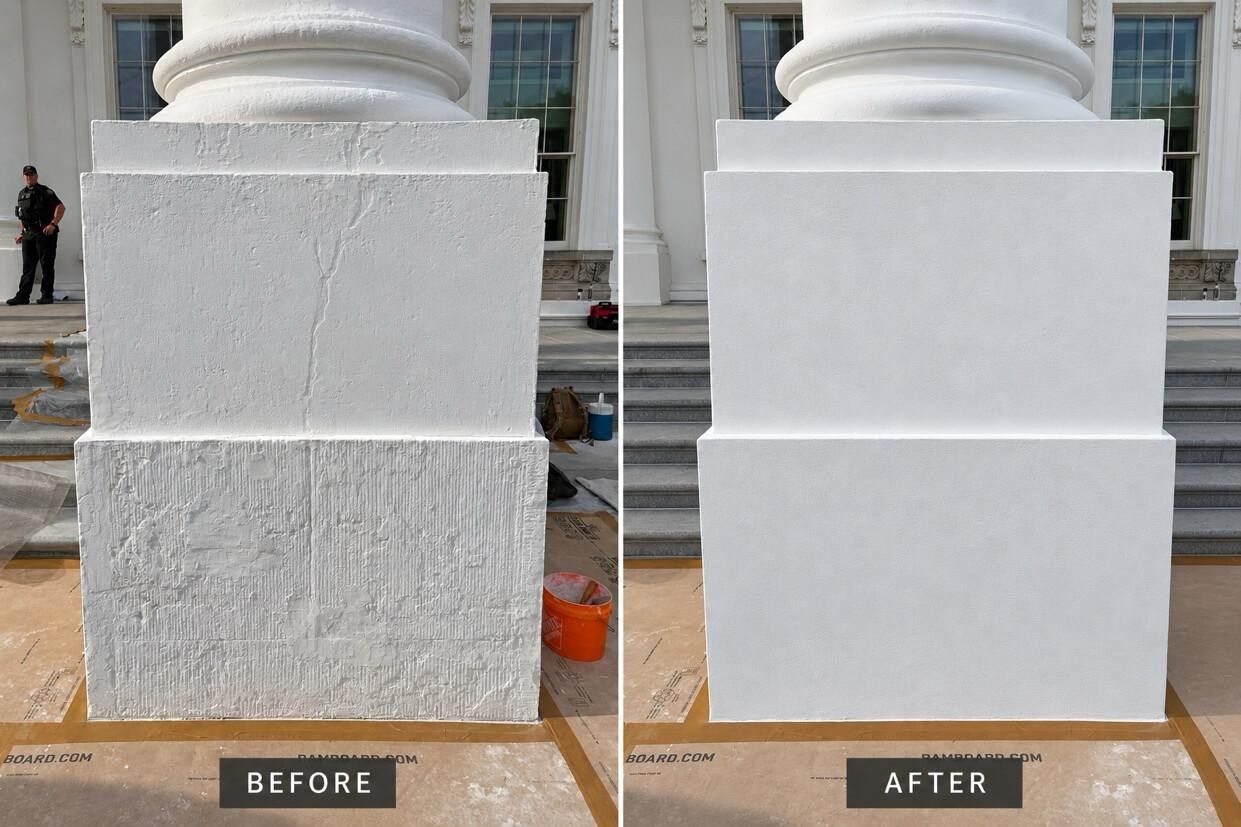
Donald Trump published a set of images on Truth Social showcasing recent White House renovation efforts, but an analysis revealed that one key comparison photo had been digitally altered using artificial intelligence. The image in question presents a side-by-side view comparing a weathered White House column to a freshly restored version.
Online observers and technical checks confirmed that the "after" image contained telltale structural inconsistencies and carried an invisible digital watermark indicating AI editing.
The Key Details
- Visual Discrepancies: Online observers on Reddit pointed out several structural flaws in the comparison image, including an inconsistent number of steps between the before and after sides, matching window reflections, and identical cardboard placement at the base despite the supposed time gap.
- Detection via SynthID: Verification performed using Google's SynthID Detector—a system that identifies invisible watermarks embedded in synthetic or edited media—flagged the photo as having been created or edited using OpenAI tools.
- Selective AI Use: Other photos shared in the same post, depicting the main White House facade and heliport, did not carry the SynthID metadata mark.
- Real Restorations Occurred: Historical photographic evidence confirms actual physical painting work took place at the White House in June, meaning physical renovations were underway regardless of the digitally altered column image.
Why It Matters
This incident illustrates the increasing deployment of digital provenance and watermarking tools like Google's SynthID to verify media authenticity. As generative image editors become built-in features on smartphones and editing suites, distinguishing routine physical touch-ups from synthetic additions relies increasingly on embedded metadata rather than simple visual inspection.
What It Means for Readers
For general technology users, the event highlights two important practical considerations:
- Detecting Synthetic Media: Visual artifacts such as unnaturally smooth textures, asymmetric architectural details, and impossible repetition of reflections remain key indicators of AI image generation.
- Metadata Transparency: Cryptographic and invisible watermarking systems embedded by AI providers are becoming primary standard tools for verifying image origins across major online platforms.
VANTIX Takeaway
As generative tools become integrated into standard digital editing pipelines, embedded watermarking tools like SynthID are proving critical in distinguishing real documentation from synthetic enhancement.


