What Happened
During a company-size armored assault in the Donetsk Oblast of eastern Ukraine, the Russian military deployed its new Arena-M active protection system (APS) in combat for the first time. The system, designed to detect and shoot down incoming aerial threats, faced a severe test against Ukraine's highly active drone fleet.
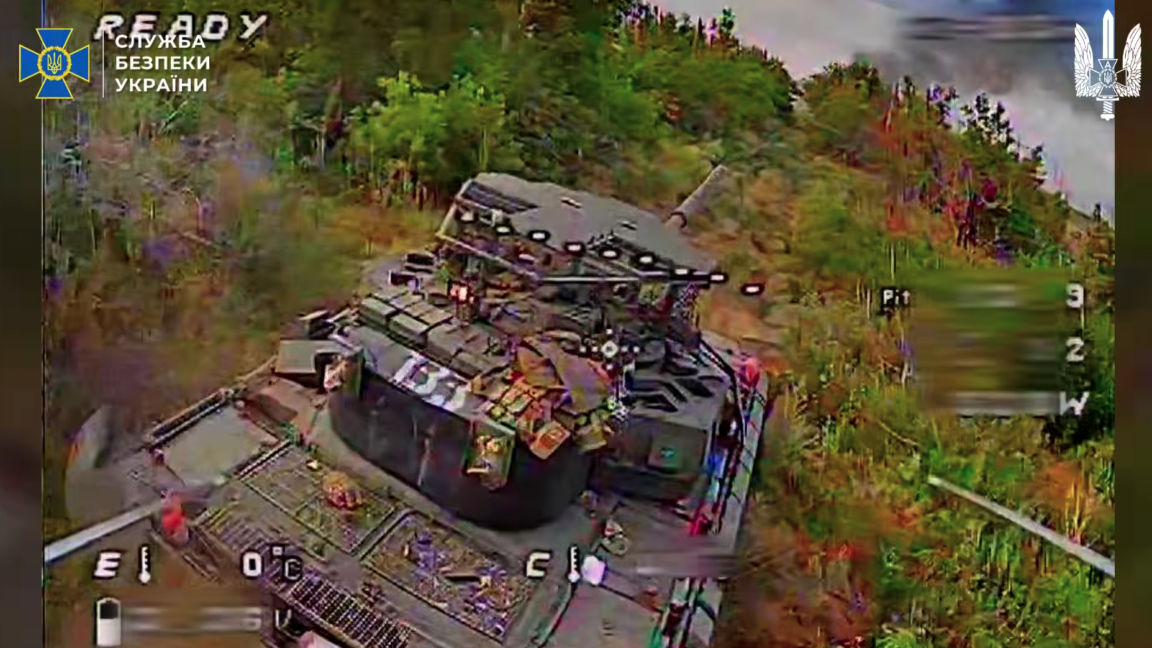
While the technology managed to intercept several incoming threats, Ukrainian defenders ultimately repelled the assault. Using coordinated, high-volume drone strikes, they destroyed at least seven Russian T-72B3A tanks, including vehicles equipped with the Arena-M system.
How the Arena-M Performed
Despite the losses, Ukrainian soldiers and military analysts reported that the Arena-M system demonstrated real defensive capabilities. According to battlefield reports, the system successfully intercepted and destroyed multiple incoming kamikaze drones before being overwhelmed.
Ukrainian forces revealed that destroying a single tank equipped with the functioning Arena-M system required a coordinated swarm of 15 to 20 drones. This high number highlights the system's protective potential, but also underscores its primary limitation: it can be saturated and exhausted by sheer numbers.
Military analyst Rob Lee noted that the combat debut shows the Russian military is actively experimenting and learning how to deploy heavy armor on a battlefield heavily saturated with unmanned aerial vehicles (UAVs). He suggested that the Arena-M system showed enough baseline effectiveness that it will likely see further development and refinement.
The Drone vs. Armor Arms Race
This development is the latest chapter in an intense, fast-evolving technological arms race. Since the full-scale invasion began in February 2022, cheap, explosive-laden commercial and custom drones have made traditional, multi-million-dollar main battle tanks highly vulnerable.
Before deploying automated active protection systems like the Arena-M, militaries relied on improvised physical defenses. These included:
- "Cope Cages": Metal screens welded or bolted to the tops of vehicles to detonate drones prematurely.
- "Turtle Tanks": Vehicles covered entirely in heavy, improvised metal plating and spikes.
While these physical structures offered some protection, they added massive weight, severely restricted vehicle mobility, and often blocked the tank crew's line of sight and the rotation of the main gun. Automated systems like the Arena-M represent an attempt to protect vehicles electronically and kinetically without sacrificing mobility.
What It Means for Modern Warfare
The engagement in Donetsk demonstrates that while active protection systems can raise the defensive threshold of armored vehicles, they are not a silver bullet against modern drone tactics.
For defense developers and military planners globally, the takeaway is clear: individual vehicle defenses must be capable of handling rapid, multi-directional swarm attacks. As long as the cost of producing and deploying 20 kamikaze drones remains a fraction of the cost of a single main battle tank, drone saturation will remain a highly effective counter-strategy against even advanced armored defenses.
VANTIX Takeaway
Active protection systems like the Arena-M show that armor can fight back against drone threats, but current technology is still losing the economic war. When 15 to 20 cheap drones can successfully overwhelm and destroy a multi-million-dollar tank, the offensive advantage remains firmly with low-cost, high-volume unmanned systems.


